



Research published in the journal Sleep found that chronic insomnia affects roughly 10% to 15% of adults long term, while stress-related sleep problems impact far more people at different stages of life. Many sufferers try supplements, sleep medications, white noise, meditation apps, breathing exercises, magnesium, melatonin, and endless nighttime routines, yet their brain still refuses to switch off when it matters most. Here is the thing. Insomnia is rarely just a sleep problem. In many cases it becomes a subconscious conditioning problem.
You may feel exhausted physically while your mind remains hyper-alert emotionally. You may dread bedtime because it has become associated with frustration, overthinking, clock watching, pressure, and fear of another bad night. Over time your nervous system learns the pattern. The bedroom stops feeling like a place of recovery and starts feeling like a place of performance pressure.
Insomnia often continues not because your body forgot how to sleep, but because your nervous system learned how to stay alert.
This is where hypnosis becomes different from many conventional approaches. Hypnosis does not try to force sleep mechanically. It works by helping calm the subconscious threat response that keeps sleep blocked in the first place.
Why So Many Sleep Solutions Stop Working
Most people approach insomnia like a technical problem. They search for the perfect supplement, the perfect mattress, the perfect breathing pattern, or the perfect sleep routine. While those things can help, they often fail when subconscious hyperarousal remains active underneath.
You already know how exhausting insomnia feels. The real issue is what repeated sleepless nights begin teaching your brain emotionally. After enough bad nights, your subconscious mind starts anticipating struggle before you even get into bed. Your body may become tense automatically at night. Your thoughts may speed up the moment the lights go out. Some people even experience anxiety simply from seeing the clock.
Dr. Herbert Benson from Harvard Medical School spent decades researching the relaxation response and how physiological calm states reduce stress activation in the nervous system. Hypnosis often works through a similar pathway by reducing mental overactivation and helping the brain transition away from survival-oriented thinking.
Research Snapshot
• Studies published in Sleep show chronic insomnia affects up to 15% of adults long term
• Research from the American Academy of Sleep Medicine found hyperarousal is one of the core drivers of insomnia
• Stanford hypnosis research has shown measurable changes in brain activity during hypnotic states connected to attention and emotional regulation
What Hypnosis Actually Feels Like for Sleep
One reason people hesitate to try hypnosis is because they imagine losing consciousness or giving up control. In reality, most people describe hypnosis as feeling deeply absorbed, calm, mentally detached from stress, and physically heavy or relaxed. You remain aware. You can hear everything. You can move if you want to.
This is not unconsciousness. It is focused relaxation combined with heightened subconscious responsiveness. The brain begins shifting away from constant analytical thinking and toward slower, calmer internal processing.
Many insomnia sufferers spend years trying to "make" themselves sleep, while hypnosis works by teaching the mind and body how to stop fighting wakefulness.
Milton Erickson, one of the most influential figures in modern hypnosis, believed trance states occur naturally every day. You experience similar states while driving familiar roads, becoming absorbed in music, daydreaming, or losing track of time during a movie. Hypnosis simply guides that natural ability intentionally.
Why Hypnosis Often Helps When Medications Have Not
Sleep medications can sometimes help short term, especially during acute stress periods, but they do not always retrain the subconscious patterns maintaining insomnia underneath. That is an important distinction.
Not because medication is bad, but because insomnia frequently involves conditioned emotional responses, anticipatory anxiety, subconscious hypervigilance, and learned mental habits that continue operating automatically night after night.
Hypnosis targets those subconscious loops directly. During trance states the mind becomes more receptive to suggestions involving safety, calmness, physical heaviness, slowing thoughts, emotional release, and healthy sleep expectation. Over repeated sessions these associations can begin replacing the old insomnia pattern.
In Practice
In years of working with clients experiencing stress, anxiety, and sleep difficulties, I have consistently observed that the people who improve most are usually not the people forcing sleep hardest. They are the people who gradually retrain their nervous system to stop fearing wakefulness. Once the subconscious mind no longer treats bedtime like a problem to solve, sleep often returns far more naturally.
That is also why many people benefit enormously from hypnosis recordings used repeatedly at home. Consistent repetition matters because subconscious conditioning strengthens through familiarity and emotional association.
Why Sleep Hypnosis Recordings Can Be So Effective
One hypnosis session may create noticeable relaxation, insight, or emotional release, but repeated exposure creates deeper subconscious reinforcement over time. This is one of the biggest advantages of professionally designed hypnosis recordings.
You can use them nightly. You can replay them consistently. You can condition your nervous system repeatedly in the exact environment where sleep actually happens. That repetition matters because the subconscious mind learns through emotional familiarity and pattern reinforcement.
For many insomnia sufferers, bedtime itself has become emotionally charged. Using calming hypnosis recordings in your own bed, in your own safe environment, often helps rebuild positive associations gradually and naturally.
This is especially important for people whose insomnia includes racing thoughts, stress anticipation, nighttime anxiety, emotional overload, or chronic overthinking. The subconscious brain often responds far better to repetition and emotional conditioning than to intellectual effort alone.
The Real Goal Is Not Just Sleep
Many people think the goal is simply unconsciousness. In reality, the deeper goal involves rebuilding trust between your mind, body, and nervous system.
People with chronic insomnia often become mentally exhausted long before bedtime even arrives. They monitor sleep constantly. They predict failure. They calculate hours remaining. Their nervous system becomes trapped in anticipation.
Hypnosis helps interrupt that cycle by shifting attention away from performance pressure and back toward calm internal safety. Dr. Stephen Porges' Polyvagal Theory explains how feelings of safety directly affect nervous system regulation. When the body stops feeling threatened, restorative states become far easier to access.
Sleep is a byproduct of safety, surrender, and nervous system calmness.
This is why many people notice benefits beyond sleep itself. They often report calmer evenings, less emotional tension, improved recovery, reduced overthinking, and better emotional resilience during the day.
A Different Way Forward for Chronic Insomnia
If you have struggled with insomnia for a long time, you may already feel frustrated, discouraged, or even fearful about sleep itself. That reaction makes sense. Repeated sleep disruption affects mood, concentration, energy, confidence, motivation, and emotional stability.
But here is the thing. Your difficulty sleeping does not mean your brain is broken. Very often it means your nervous system became conditioned into excessive vigilance and nighttime alertness. Conditioning can change.
Dr. Michael Yapko, internationally recognized for his work in clinical hypnosis, has long emphasized hypnosis as a powerful tool for interrupting unhealthy subconscious patterns connected to stress and emotional overload. Sleep problems frequently sit inside those exact same subconscious loops.
A well-designed hypnosis approach helps calm the mental noise, reduce subconscious resistance, retrain emotional associations with bedtime, and restore healthier nervous system regulation over time. Not overnight magic. Not mind control. Not unconsciousness. Subconscious conditioning.
The moment your subconscious mind stops expecting struggle at night, your body often remembers how to sleep naturally again.
That is also one of the core principles behind NeuroFrequency Programming™ and modern hypnosis-based sleep conditioning approaches. Research continues showing that the subconscious mind plays a major role in emotional regulation, physiological arousal, habit loops, attention patterns, and stress anticipation. When those systems calm down, sleep often improves as a natural consequence rather than a forced outcome.

🔒 Related Solutions
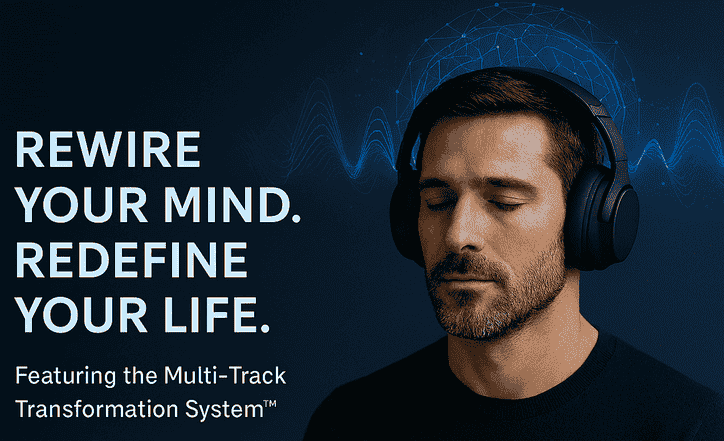
All our programs use theta brainwave frequencies and binaural beats to guide your mind into the deeply receptive state where subconscious change actually occurs - the same state reached by experienced meditators, and the level at which hypnotic suggestion produces its most lasting results. Simply listen with headphones, relax, and let the recordings do the work.
🧠 Most Specific Program
The Sleep / Insomnia Subliminal Hypnosis works directly at the deepest subconscious level to reprogram your mind for sleep - to Calm your mind, release mental noise, and naturally drift into deep, restorative sleep with ease.
🧘 Another Powerful Program
🧠 The Freedom from Anxiety Program contains a powerful 4-track hypnosis program designed to alleviate anxiety, stress and overwhelm at the subconscious source, by providing hypnotic tracks which can be safely used at various times throughout the day.
The Deep Meditation Program allows you to access the deepest levels of relaxation to flow through every area of your life, freeing the mind of stress to allow the natural sleep process to function.
🎯 Need Something More Personalized?
While our pre-made programs are effective for most people, if your situation feels more complex, deeply embedded, or highly personal than what a general program can address, a tailored approach may offer a deeper level of support. Our Custom Hypnosis Recordings are personally designed for you, giving you the flexibility to target your specific goals and challenges through carefully engineered layered audio tracks, theta brainwave entrainment, binaural beats, and NeuroFrequency Programming™ - to guide the mind into deeply relaxed, highly receptive states where positive subconscious changes occur more naturally.
🎯 New to Relaxation / Self-Hypnosis?
Our complementary 12 Minute Relaxation provides a guided recording perfect for starting out, or for anyone wanting quick light relaxation. More free downloads also on this page, for sleep etc.

🎧 Recommended Programs for This Topic

Sleep / Insomnia
Drift into a deep satisfying night of sleep, with our subliminal recording of beautiful relaxation music which synchronizes brain waves.

Freedom from Anxiety
Dissolve stress, worry and overwhelm at the deepest subconscious level with this powerful 4-track hypnosis system.

Deep Meditation Program
Access the deepest levels of relaxation to bring inner peace into every area of your life.

Custom Hypnosis Recordings
Tailored specifically to your goals, challenges, and personal circumstances — offering the most precise and individualized path to deep subconscious change.
Shop
See our entire selection of powerful hypnotic self help programs