



Why Your Brain Refuses to Switch Off at Night
According to the American Academy of Sleep Medicine, around 30% of adults experience symptoms of insomnia at some point, while chronic insomnia affects roughly 10% of the population. Matthew Walker from UC Berkeley has repeatedly warned that insufficient sleep impacts emotional regulation, focus, memory, immune function, and even long term health outcomes. Yet despite all the sleep apps, supplements, routines, and sleep hygiene advice available today, millions of people still lie awake staring at the ceiling every night.
Here is the thing. Most insomnia is not really a sleep problem. It is a subconscious alertness problem.
You already know how to sleep. Your body already knows how to drift into deep unconscious rest naturally. The real issue is that some deeper part of your mind no longer feels safe enough to let go.
This is not laziness, weakness, or failure. It is a learned subconscious pattern where the nervous system becomes conditioned to stay vigilant, alert, mentally active, emotionally braced, or internally "on guard" even when you are exhausted.
Sleep is not something you force. Sleep happens when the subconscious mind finally stops scanning for danger.
Many people with insomnia unknowingly train themselves into nighttime anxiety. The bed becomes associated with pressure, frustration, overthinking, emotional processing, clock watching, or fear about tomorrow. Eventually the subconscious mind begins treating bedtime itself as a trigger for alertness.
Not because the person wants to stay awake, but because the nervous system has learned that nighttime is a time for monitoring, solving, anticipating, worrying, or emotionally protecting itself.
This is why hypnosis can become so powerful for insomnia. It works directly with the subconscious patterns driving the sleep disturbance instead of fighting symptoms at the surface.
The Subconscious Conditioning Behind Chronic Insomnia
Most people think insomnia starts in the conscious mind. They assume they simply think too much, use screens too late, drink too much caffeine, or fail to relax properly. Sometimes those things contribute, but they rarely explain why sleep struggles continue month after month or year after year.
The deeper issue often involves subconscious conditioning.
If your nervous system has spent years under pressure, emotionally overloaded, hyper-responsible, anxious, burnt out, grieving, stressed, or constantly anticipating problems, your brain slowly adapts to survival mode. Robert Sapolsky's work at Stanford has shown how chronic stress reshapes the nervous system and increases physiological vigilance.
Over time, the subconscious mind starts believing that remaining alert equals safety.
So even when your conscious mind says, "I need sleep," another part of you quietly responds, "We cannot fully switch off right now."
This creates one of the cruelest loops in insomnia. The more desperately you want sleep, the more performance pressure develops around bedtime. Suddenly sleep becomes a nightly test you fear failing.
People often tell themselves things like:
- "If I do not sleep tonight, tomorrow will be ruined."
- "Something is wrong with me."
- "I have to force myself to sleep."
- "Why can't my brain just shut up?"
Every one of those thoughts increases subconscious alertness.
Michael Yapko, one of the world's leading hypnosis clinicians, has written extensively about how expectation and internal emotional associations influence sleep disorders. When bedtime becomes emotionally charged, the subconscious mind starts anticipating wakefulness before your head even touches the pillow.
Chronic insomnia often stops being about sleep itself. It becomes a conditioned relationship between nighttime and emotional tension.
Why Your Mind Becomes Loudest in the Dark
During the day your brain stays occupied. Conversations, emails, movement, responsibilities, noise, tasks, and stimulation constantly pull your attention outward. At night, everything quiets down.
That silence creates space for unresolved subconscious material to rise.
Here is the thing. The nighttime mind does not create new fears. It reveals unprocessed emotional momentum that was already there beneath the surface.
This is why so many people experience racing thoughts at 2 AM that barely appeared during the day. The subconscious mind finally has room to present unfinished emotional material.
Research Snapshot
• The CDC reports that adults sleeping under 7 hours show significantly higher stress and mood disturbance levels.
• Matthew Walker's research found sleep deprivation amplifies amygdala reactivity by up to 60%.
• Research published in Behavioral Sleep Medicine found pre-sleep cognitive arousal strongly predicts chronic insomnia severity.
Many high performers struggle with this intensely because their subconscious identity becomes tied to productivity, control, responsibility, or achievement. The moment external stimulation disappears, the nervous system suddenly notices everything it has been suppressing.
This is not weakness. It is accumulated activation.
In Practice
In years of working with athletes and performance clients, I have consistently observed that the people who struggle most with insomnia are often highly driven, mentally responsible individuals who rarely allow themselves true emotional decompression during the day. This pattern appears across executives, athletes, entrepreneurs, and caregivers regardless of income or success level, which suggests the core issue is usually subconscious hypervigilance rather than poor sleep habits alone.
Russell Foster, a neuroscientist from Oxford University specializing in circadian rhythms, has emphasized how emotional stress disrupts the brain's natural sleep timing systems. When subconscious threat detection stays elevated, the brain struggles to transition into restorative sleep states naturally.
That is why hypnosis focuses less on "trying to sleep" and more on teaching the nervous system how to feel safe enough to surrender control again.
How Hypnosis Changes the Sleep Response
Hypnosis works differently from surface level relaxation techniques because it communicates directly with the subconscious processes shaping behavior, emotional response, expectation, and physiological state.
This is not mind control. It is guided subconscious retraining.
During hypnosis, the mind enters a highly focused inward state where subconscious associations become more accessible and more open to change. Dr. David Spiegel describes hypnosis as a state of focused attention combined with reduced peripheral awareness and enhanced responsiveness to suggestion.
In practical terms, hypnosis helps interrupt the conditioned stress response attached to bedtime.
Instead of reinforcing thoughts like:
- "I hope I can sleep."
- "What if I wake up again?"
- "Tomorrow will be terrible."
The subconscious mind gradually learns new associations:
- Nighttime equals safety
- The body knows how to let go
- Rest happens naturally
- The mind does not need to monitor constantly
- Deep sleep feels safe again
“The brain changes itself through experience.” - Norman Doidge
That quote captures the entire principle behind subconscious sleep retraining.
Every night of stress based wakefulness teaches the nervous system to repeat the same pattern. Hypnosis helps reverse that conditioning by repeatedly exposing the subconscious mind to calm, safety, surrender, and restorative imagery while the brain sits in a highly receptive state.
Not because hypnosis magically knocks you unconscious, but because it reduces the subconscious resistance preventing natural sleep from occurring.
The Hidden Emotional Drivers Many People Never Notice
One of the biggest misunderstandings about insomnia is the belief that it always comes from obvious stress.
Many people say, "I am not even anxious," while their nervous system remains deeply activated underneath.
The subconscious mind stores emotional patterns differently from the conscious mind. You may consciously feel functional while your physiology quietly remains overloaded.
This is especially common in people who:
- Overthink constantly
- Feel responsible for everyone
- Suppress emotions
- Stay busy all day
- Push through exhaustion
- Struggle to switch off mentally
- Need control to feel safe
Here is the thing. The subconscious mind does not care whether stress looks dramatic externally. It responds to internal emotional load.
Some insomnia patterns even begin after periods of grief, heartbreak, burnout, trauma, uncertainty, financial pressure, relationship instability, or prolonged responsibility. The conscious mind may move forward while the nervous system keeps operating as though danger still exists.
This reframing changes everything because it removes the self-judgment people often carry about sleep struggles. You stop seeing yourself as broken and start understanding the subconscious processes driving the pattern.
Why Sleep Medication Often Misses the Core Issue
Sleep medication can absolutely help some people temporarily, especially during acute periods of distress or major life disruption. But medication alone often does not retrain the subconscious patterns maintaining insomnia.
This is not anti-medication. It is simply recognizing the difference between sedation and subconscious conditioning.
You can chemically induce tiredness while the nervous system still remains emotionally hyper-alert underneath. That is why many people feel exhausted despite technically sleeping.
The body rests partially while the subconscious mind never fully lets go.
Deep restorative sleep requires psychological surrender, not just physical unconsciousness.
Hypnosis approaches insomnia differently because it aims to reduce the subconscious need for vigilance itself.
That may involve:
- Reducing anticipatory anxiety around bedtime
- Interrupting overthinking loops
- Creating emotional decompression
- Rebuilding feelings of internal safety
- Training the nervous system to soften hyper-alert patterns
- Reconditioning the subconscious relationship with sleep
Milton Erickson, widely considered one of the pioneers of modern hypnotherapy, often emphasized indirect subconscious learning rather than force. That principle matters enormously for insomnia because trying harder to sleep usually intensifies the struggle.
Sleep returns more naturally when the subconscious mind stops fighting itself.
Rebuilding Trust Between Your Mind and Sleep
If you have struggled with insomnia for a long time, you may unconsciously fear bedtime now. Even entering the bedroom can trigger anticipation, frustration, dread, or internal monitoring.
That does not mean you are permanently stuck.
The brain remains adaptable throughout life. Neuroplasticity research from scientists like Michael Merzenich and Norman Doidge continues showing that repeated mental and emotional experiences physically reshape neural pathways over time.
This means your sleep response can also change.
Not overnight in every case, but progressively and systematically as the subconscious mind learns a different pattern.
Here is the thing. Lasting sleep improvement usually begins when people stop attacking themselves for being awake.
The nervous system softens when pressure softens.
The subconscious mind calms when it no longer feels monitored, judged, rushed, or forced.
That is why effective hypnosis for insomnia focuses so heavily on internal safety, surrender, emotional decompression, and subconscious trust.
Over time, the brain relearns something simple yet powerful:
You are safe enough to let go.
At MindTraining.net, this understanding sits at the center of NeuroFrequency Programming™. Lasting change happens when subconscious conditioning changes first. Whether the issue involves insomnia, anxiety, confidence, focus, or performance under pressure, the subconscious mind usually drives the pattern long before the conscious mind notices it.
Once the subconscious mind relearns safety, the body often remembers how to sleep naturally again.

🔒 Related Solutions
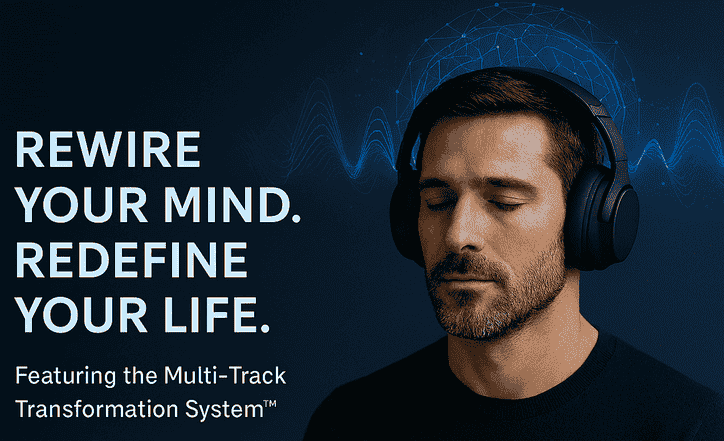
All our programs use theta brainwave frequencies and binaural beats to guide your mind into the deeply receptive state where subconscious change actually occurs - the same state reached by experienced meditators, and the level at which hypnotic suggestion produces its most lasting results. Simply listen with headphones, relax, and let the recordings do the work.
🧠 Most Specific Program
The Sleep / Insomnia Subliminal Hypnosis works directly at the deepest subconscious level to reprogram your mind for sleep - to Calm your mind, release mental noise, and naturally drift into deep, restorative sleep with ease.
🧘 Another Powerful Program
🧠 The Freedom from Anxiety Program contains a powerful 4-track hypnosis program designed to alleviate anxiety, stress and overwhelm at the subconscious source, by providing hypnotic tracks which can be safely used at various times throughout the day.
The Deep Meditation Program allows you to access the deepest levels of relaxation to flow through every area of your life, freeing the mind of stress to allow the natural sleep process to function.
🎯 Need Something More Personalized?
While our pre-made programs are effective for most people, if your situation feels more complex, deeply embedded, or highly personal than what a general program can address, a tailored approach may offer a deeper level of support. Our Custom Hypnosis Recordings are personally designed for you, giving you the flexibility to target your specific goals and challenges through carefully engineered layered audio tracks, theta brainwave entrainment, binaural beats, and NeuroFrequency Programming™ - to guide the mind into deeply relaxed, highly receptive states where positive subconscious changes occur more naturally.
🎯 New to Relaxation / Self-Hypnosis?
Our complementary 12 Minute Relaxation provides a guided recording perfect for starting out, or for anyone wanting quick light relaxation. More free downloads also on this page, for sleep etc.

🎧 Recommended Programs for This Topic

Sleep / Insomnia
Drift into a deep satisfying night of sleep, with our subliminal recording of beautiful relaxation music which synchronizes brain waves.

Freedom from Anxiety
Dissolve stress, worry and overwhelm at the deepest subconscious level with this powerful 4-track hypnosis system.

Deep Meditation Program
Access the deepest levels of relaxation to bring inner peace into every area of your life.

Custom Hypnosis Recordings
Tailored specifically to your goals, challenges, and personal circumstances — offering the most precise and individualized path to deep subconscious change.
Shop
See our entire selection of powerful hypnotic self help programs