




It does not always look like fear from the outside. It looks like hesitation before shooting. It looks like giving ground when the opponent pressures. It looks like a technically capable wrestler who is somehow always slightly off their attack timing, always just a fraction slow on the penetration step, always finding reasons to tie up rather than commit to the finish. From the mat side, it can look like passivity or lack of aggression. From the inside, it feels like something quite different.
Fear of contact in wrestling - of being hit, of taking a shot, of the physical collision that competitive wrestling demands - is one of the sport's most commonly carried and least openly discussed performance limiters. Not because wrestlers are not tough. The toughness required to train and compete in wrestling is real and significant. But because the subconscious fear of specific physical consequences - of getting hit with a counter, of being taken down, of the pain and exposure of a bad shot - operates below the level of conscious toughness and undermines it regardless of how much grit the wrestler consciously brings to the mat.
Fear of contact is not a character deficiency. It is a specific subconscious threat response - and like all subconscious threat responses, it has a mechanism, a source, and a resolution that most wrestlers never discover because the conversation about it almost never happens.
What the Fear Is Actually Doing to Your Wrestling
The performance consequences of contact fear in wrestling are specific and compounding. Each one individually costs something. Together they fundamentally alter the quality of wrestling that is available to a technically capable athlete.
Timing compromise. Wrestling attacks require commitment - full, explosive, technically precise commitment that leaves no room for the hesitation that contact fear produces. The wrestler who is subconsciously managing the fear of the counter is not fully committing to the shot. The hesitation may be milliseconds. But in wrestling, milliseconds are the difference between a completed takedown and a sprawl. The fear does not prevent the attack. It compromises it at precisely the moment when commitment is most critical.
Stance and position creep. Contact fear produces a subconscious preference for range - for keeping distance from the opponent in ways that feel like tactical positioning but are actually avoidance of the proximity that wrestling requires. The stance drifts upright, making penetration steps longer and slower. The position backs away from pressure rather than meeting it, ceding the center and the initiative to an opponent who is willing to close distance.
Reaction quality. Wrestling demands fast, decisive responses to constantly changing situations. The subconscious that is partly occupied with threat assessment - monitoring for the contact event it is anxious about - has reduced resources available for the real-time tactical processing that reactive wrestling requires. Decision quality drops. Response timing slows. The wrestler who should be countering is still processing the threat that the contact represented rather than acting on the opportunity it created.
Conditioning of the attack pattern. Over time, contact fear produces a conditioning effect on the wrestler's attack repertoire - the shots and attacks that carry the highest contact risk become progressively less available, while lower-contact approaches become the default. The wrestling becomes narrower, more predictable, and easier to defend - not because the technical repertoire was limited, but because the subconscious has gradually removed the highest-risk entries from active use.
Where the Fear Comes From
Contact fear in wrestling almost always has specific origins - particular experiences that the subconscious has stored as high-threat templates and that it applies to subsequent similar situations as a protective measure.
A significant injury - or a near-injury - that the subconscious associated with a specific type of contact or a specific position. A period of being dominated by a stronger, harder-hitting training partner that the subconscious generalized into a broader threat assessment about contact exchange. An early competitive experience where being countered produced a painful and exposing outcome that the subconscious filed under avoid.
"The subconscious does not distinguish between a genuinely dangerous contact situation and a competitive wrestling exchange. It responds to the threat cue - the anticipated contact - with the same protective urgency it would bring to any perceived threat. The protection is real. The threat assessment is often wildly disproportionate."
It can also develop more gradually - through training environments where hard contact without adequate technical preparation produced repeated negative experiences, or through a personal pain sensitivity that the subconscious has learned to protect against more aggressively than competitive wrestling can accommodate.
Why Toughening Up Does Not Fix It
The standard coaching response to contact hesitation in wrestling - more drilling of the offensive movements, more live wrestling, more exposure to contact - is correct in its direction but insufficient in its reach. More exposure to contact does build some subconscious familiarity with it. But it does not specifically address the threat assessment that is generating the fear response. It simply provides more experiences of surviving contact, which the subconscious may or may not generalize into a reduced threat assessment depending on how those experiences are processed.
For many wrestlers, more live wrestling simply means more repetitions of the fear-driven hesitation pattern - more conditioning of the avoidance behavior that the subconscious is generating to protect against the threat it has identified. The technical drilling improves. The subconscious pattern does not.
Toughening up is a conscious instruction. The fear is a subconscious program. And conscious instructions to a subconscious program produce limited results - because the program does not receive the instruction.
Turning Fear Into Control
The transformation from contact-fearful wrestling to contact-controlled wrestling - from the defensive hesitation that fear produces to the aggressive, committed, explosive wrestling that competitive success requires - happens at the subconscious level through a specific process of threat assessment updating.
The subconscious needs to genuinely update its assessment of contact exchange - from threat requiring avoidance to managed risk requiring commitment. Not through conscious reassurance that contact is fine, but through a genuine subconscious update that changes the emotional response to the contact cue from fear to readiness.
This update happens most effectively through deliberate subconscious work in the theta state - where the specific contact scenarios that produce the fear response can be rehearsed in conditions of genuine safety and control, building new associations with the contact cue that progressively displace the threat association it currently carries.
- The shot that currently feels threatening is rehearsed subconsciously in a state of calm control
- The contact exchange that currently produces hesitation is experienced internally with confidence and aggression
- The counter that the subconscious is currently protecting against is processed as a manageable outcome rather than a catastrophic one
- New subconscious associations form around the contact cue - readiness, aggression, control - that begin to displace the existing threat association
- The hesitation that was the expression of the old association reduces as the new association becomes the dominant subconscious response
What Controlled Aggression Actually Feels Like
The wrestler who has done this work does not become indifferent to contact or pain. Wrestling still hurts and the subconscious is still appropriately alert. What changes is the quality of the alertness - from anxious threat monitoring to focused competitive readiness. The contact that was feared becomes the contact that is sought - the physical collision that the confident, committed wrestler uses as a competitive tool rather than something to be managed and avoided.
The attacks become fuller. The timing becomes cleaner. The position stays lower and closer because the subconscious is no longer generating the distance-seeking behavior that fear produced. The wrestling that was technically capable but undermined by hesitation becomes technically capable and fully expressed - and the difference in competitive outcome is immediate and significant.
The wrestler you are capable of being is not held back by technical limitations. It is held back by a subconscious threat assessment that was formed in specific circumstances and that can be genuinely changed through the right kind of deliberate mental work. The contact is not the problem. Your relationship with it is. And relationships - even deep, long-standing subconscious ones - can be changed.
 🤼 Wrestling Performance Hypnosis Program
Transform the subconscious threat assessment that has been producing hesitation into the genuine competitive readiness that wrestling demands - building the contact confidence, attack commitment, and aggressive control that your technical training has always been capable of expressing.
Learn more about the Wrestling Hypnosis Program →
The Freedom from Anxiety Program dissolves stress, worry and overwhelm at the deepest subconscious level with a powerful 4-track hypnosis system.
The Deep Focus & Concentration Program is a 5-track subconscious system designed to build deep work states, concentration, and sustained mental clarity for high-performance focus.
🎯 Need Something More Personalized?
While our pre-made programs are effective for most people, if your situation feels more complex, deeply embedded, or highly personal than what a general program can address, a tailored approach may offer a deeper level of support. Our Custom Hypnosis Recordings are personally designed for you, giving you the flexibility to target your specific goals and challenges through carefully engineered layered audio tracks, theta brainwave entrainment, binaural beats, and NeuroFrequency Programming™ - to guide the mind into deeply relaxed, highly receptive states where positive subconscious changes occur more naturally.
🎯 New to Relaxation / Self-Hypnosis?
Our complementary 12 Minute Relaxation provides a guided recording perfect for starting out, or for anyone wanting quick light relaxation. More free downloads also on this page, for sleep etc.

🎧 Recommended Programs for This Topic
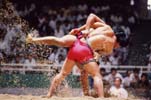
Wrestling
Enhance focus, confidence, and mental toughness with targeted wrestling mental training.

Boxing
Enhance focus, confidence, and mental toughness with targeted boxing mental training.

Martial Arts
Enhance focus, confidence, and mental toughness with targeted martial arts mental training.

All Sports Hypnosis Programs
Discover our full collection of sports hypnosis products, with easy access to detailed information on each program.