




It happens fast. One moment you are on your feet, in control of the match, working your setups. The next you are on the mat, your opponent scoring points, the referee signalling the takedown. In those first few seconds after hitting the mat, something happens in every wrestler that has nothing to do with technique and everything to do with the mental programming they have built around adversity, setbacks, and the meaning they assign to being scored on.
For some wrestlers, a takedown is simply a tactical event - two points for the opponent, a change of position, and an immediate shift of focus to the work of getting back up and reversing the situation. Their subconscious processes it quickly, cleanly, and without the kind of emotional weight that interferes with what needs to happen next. These wrestlers are dangerous on the mat. Their opponents know that scoring on them does not demoralise them - it might even make them more determined.
For others, a takedown carries more weight than two points. It confirms something. It activates a familiar pattern of self-doubt, frustration, or resignation that lives in the subconscious and has been waiting for exactly this kind of trigger. These wrestlers are still technically capable of getting back up and winning the match. But their subconscious is already working against them - tightening their movement, narrowing their options, and making the physical task of recovery significantly harder than it needs to be.
The difference between these two wrestlers is not talent. It is subconscious conditioning. And conditioning is trainable.
"The takedown scores two points. The mental response to the takedown determines whether it costs two points or the entire match."
What the Brain Does When You Hit the Mat
The moment a takedown is completed, your brain registers it as a negative competitive event and initiates an automatic assessment of what it means. This assessment happens in milliseconds and below the level of conscious thought - the subconscious is already running its interpretation before you have had a single deliberate thought about the situation.
If the subconscious interpretation is threat-based - if it reads the takedown as a sign that the match is being lost, that the opponent is better, that recovery is unlikely - the stress response deepens. Cortisol rises further. Muscle tension increases throughout the body, including in the hips and legs that need to be mobile and explosive for bottom wrestling. Attention narrows to the immediate threat of being controlled rather than opening to the opportunities for reversal and escape that the position may contain.
If the subconscious interpretation is neutral or even opportunistic - if it reads the takedown as a tactical setback that has a known solution, as a situation the wrestler has been in before and recovered from, as the moment where their bottom wrestling takes over - the response is entirely different. The body stays loose. The attention stays broad. The automatic responses that effective bottom wrestling requires are available rather than impaired by anxiety.
Two wrestlers hit the mat in the same position. One's subconscious is working for them. The other's is working against them. The physical situation is identical. The mental situation could not be more different.
The Three-Second Window
Sports psychologists who work with wrestlers often talk about a critical window immediately after a negative competitive event - a brief period in which the mental response to the event is still malleable, still open to intervention, before the emotional weight of it has fully set in and begun to affect performance. For a wrestling takedown, this window is roughly three seconds.
In those three seconds, a trained wrestler can interrupt the negative interpretation loop before it takes hold - through a physical cue, a deliberate breath, a single clear focus word - and redirect their subconscious from threat-processing back to performance-processing. This is not suppression. It is redirection. The frustration is acknowledged and immediately set aside in favour of the task that actually matters: getting back up.
This three-second reset is a trained skill. It does not happen automatically in wrestlers who have not practised it. But in wrestlers who have built it through deliberate mental training - who have rehearsed the takedown scenario and the reset response until the sequence is automatic - it fires reliably, in competition, under the kind of pressure that would override any consciously maintained routine.
Bottom Wrestling Confidence - The Subconscious Dimension
Effective bottom wrestling requires a particular quality of confident aggression - the active, relentless pursuit of reversal and escape that makes a wrestler dangerous from underneath rather than merely difficult to pin. This quality is technically dependent - it requires solid stand-up, reversal technique, and the ability to create motion from a controlled position. But it is also deeply subconscious.
The wrestler who believes, at an automatic level, that they are dangerous from the bottom - who expects to get up, who attacks every opportunity for escape and reversal with genuine conviction - is a fundamentally different bottom wrestler than one who is technically capable but subconsciously resigned to the position. The first wrestler's body moves differently. Their timing is better. Their commitment to attacking positions is total rather than tentative. And their opponent feels it - the difference between controlling a wrestler who is trying to escape and controlling one who expects to.
Building this bottom wrestling confidence through subconscious training means conditioning the automatic expectation of recovery - rehearsing successful escapes and reversals so vividly and repeatedly that the subconscious treats being on the bottom as a temporary situation rather than a definitive one.
The Pattern That Keeps Wrestlers Down
Some wrestlers carry a specific subconscious pattern around being taken down that goes beyond the immediate match situation. They have been taken down enough times in high-pressure moments, and the emotional experience has been significant enough, that the subconscious has begun to build a general expectation - a quiet but persistent belief that being taken down is what happens to them, that opponents at a certain level will score on them, that the bottom position is where their matches go to die.
This pattern is self-fulfilling. The expectation of being taken down subtly affects stance, movement, and aggressiveness in neutral - producing the slightly more defensive posture that makes takedowns more likely. The resignation after a takedown impairs bottom wrestling, making escape and reversal harder to achieve. And each confirmation of the pattern deepens it further.
Breaking this pattern requires working at the level where it was installed - in the subconscious, through direct conditioning that replaces the expectation of being controlled with the expectation of recovery. Not through positive thinking layered over genuine doubt, but through the kind of deep subconscious reprogramming that hypnosis and mental performance training are specifically designed to produce.
- Takedown response conditioning - building the automatic three-second reset as a trained reflex rather than a consciously maintained intention.
- Bottom wrestling identity - installing the subconscious expectation of recovery, replacing resignation with the automatic conviction that getting up is what happens next.
- Adversity reframing - conditioning the subconscious to read a takedown as a tactical situation with a known solution rather than a confirmation of a negative pattern.
- Match momentum management - building the ability to prevent a single score from shifting the psychological momentum of the entire match, keeping full competitive intensity available regardless of the scoreboard.
The Wrestler Who Cannot Be Demoralised
There is a particular competitive quality that the best wrestlers develop over time - a reputation for being impossible to demoralise. Opponents who score on them know that the points are on the board but the match is not won. These wrestlers come back with more intensity after a takedown than before it. They are more dangerous down two than they were at neutral. And their opponents know it, which changes the psychology of the entire match from the opening whistle.
This quality is not stubbornness or bravado. It is a trained subconscious response to adversity that has been built so consistently and so deeply that it fires automatically every time - not as an act of will but as the default output of a subconscious that has been conditioned to respond to being scored on with increased determination rather than reduced confidence.
It is available to every wrestler. Not through toughening up or trying harder. Through the deliberate training of the subconscious reset response until it is as automatic and as reliable as any physical technique in the arsenal.
Being taken down is part of wrestling. What you do with it - in the three seconds after the whistle, in the quality of your bottom wrestling, in the mental state you carry into the rest of the match - is entirely within your control, and entirely within your power to train.

🤼 Wrestling Mental Performance Program - A dedicated subconscious mind training program for wrestlers covering takedown response, bottom wrestling confidence, adversity reset, and the undemoralisable competitive identity that keeps performing regardless of what the scoreboard says.
🎯 Personalized Sports Hypnosis Recording - A fully personalized session built around your specific response to being scored on, your bottom wrestling patterns, and the mental reset you are working to make automatic.
🎯 New to Relaxation / Self-Hypnosis?
Our complementary 12 Minute Relaxation provides a guided recording perfect for starting out, or for anyone wanting quick light relaxation. More free downloads also on this page, for sleep etc.

🎧 Recommended Programs for This Topic
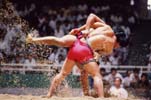
Wrestling
Enhance focus, confidence, and mental toughness with targeted wrestling mental training.

Boxing
Enhance focus, confidence, and mental toughness with targeted boxing mental training.

Martial Arts
Enhance focus, confidence, and mental toughness with targeted martial arts mental training.

All Sports Hypnosis Programs
Discover our full collection of sports hypnosis products, with easy access to detailed information on each program.