




The shot fires, the defence reacts, and suddenly neither wrestler is where they planned to be. Bodies are moving in multiple directions at once, positions are changing faster than conscious thought can track, and somewhere in that churning, unpredictable chaos, a match is being decided. Not by the wrestler who planned best. By the wrestler whose subconscious is most comfortable in the disorder - who finds opportunity where others find confusion, and who keeps making good decisions when the situation stops resembling anything that was drilled in practice.
Scrambles are one of the most technically and mentally demanding situations in wrestling. They reward athleticism, flexibility, and positional awareness - but above all they reward a particular quality of mind that most wrestlers never deliberately develop. The ability to stay calm, clear, and opportunistic when everything around you is moving fast is not a natural gift that some wrestlers are born with. It is a trained subconscious response - one that separates the wrestlers who thrive in scrambles from the ones who survive them, and from the ones who consistently come out on the wrong end.
Here is the thing: the scramble feels chaotic from the outside. From the inside, for the wrestler whose subconscious is properly prepared, it does not feel chaotic at all. It feels like opportunity - like a situation where their training and their instincts are more reliable than their opponent's, and where the outcome is theirs to take if they stay clear and keep moving.
"The scramble does not reward the wrestler who thinks fastest. It rewards the wrestler whose subconscious has been trained to act correctly without thinking at all."
Why Scrambles Are a Mental Test as Much as a Physical One
When a scramble begins, the conscious mind's ability to contribute meaningfully drops to almost nothing. The situation is moving too fast for deliberate analysis, too unpredictable for planned responses, and too physically demanding for any mental bandwidth to be spared for strategic thinking. Everything that happens in a scramble happens subconsciously - driven by trained reflexes, positional instincts, and the automatic pattern recognition that years of drilling have encoded.
This is why technical training matters enormously for scramble performance. The more deeply positions, transitions, and counters have been encoded through repetition, the more options the subconscious has available to draw on when the situation demands them. A wrestler whose technical library is shallow will run out of automatic responses quickly in a scramble and begin to freeze - to pause and think in a situation where pausing and thinking produces losses.
But technical depth is only half the equation. The other half is the mental state in which the subconscious operates during the scramble - specifically whether it is calm, open, and opportunistic, or anxious, reactive, and defensive. Two wrestlers with identical technical libraries will perform very differently in a scramble depending on their subconscious relationship with chaos and uncertainty. One will find the scramble energising, their instincts firing clearly, their movements purposeful and decisive. The other will feel overwhelmed, their technical responses degraded by anxiety, their decision-making slowed by the stress response that unpredictability triggers.
The scramble does not test your technique in isolation. It tests your technique in a specific mental state - and that mental state is trainable.
The Anxiety Response to Unpredictability
The human subconscious is wired to respond to unpredictability with increased threat activation. Novel, rapidly changing situations - exactly the conditions a wrestling scramble produces - trigger the stress response because they represent uncertainty, and uncertainty is something the brain's protective systems treat with caution. Cortisol rises, attention narrows, and the system shifts toward defensive, survival-oriented responses rather than the offensive, opportunity-seeking responses that scrambles reward.
For wrestlers who have not specifically trained their subconscious response to scrambles, this anxiety activation is almost automatic. The match goes to the mat in an unexpected way, the positions start changing rapidly, and somewhere beneath the physical effort a low-level alarm begins firing - producing the tightening, the defensive posture, and the reactive rather than proactive movement that hands scramble outcomes to the opponent.
The wrestler who has trained their subconscious to remain calm and opportunistic in unpredictable situations has effectively disabled this alarm for the specific context of wrestling scrambles. Not through suppression - the energy of the scramble is still there and is useful - but through conditioning that has taught the subconscious that this particular kind of chaos is familiar, manageable, and full of opportunity rather than threat.
Training the Scramble Mind
Building scramble confidence through physical training involves deliberate exposure to chaotic, unpredictable positions in the practice room - live wrestling from bad positions, positional sparring that starts in scrambles rather than neutral, drilling of transitions that emphasises the continuous chain of movement rather than the isolated technique. This physical exposure is essential and irreplaceable.
Mental training through visualization and hypnosis accelerates and deepens the process significantly. In the deeply relaxed hypnotic state, scramble scenarios can be rehearsed with a vividness and emotional authenticity that encodes the calm, opportunistic response at the subconscious level - building the automatic association between chaotic positional situations and the clear, decisive movement that wins them.
- Chaos familiarity conditioning - repeated vivid rehearsal of scramble situations until the subconscious treats them as familiar rather than threatening, reducing the anxiety activation that degrades scramble performance.
- Opportunistic mindset installation - encoding the automatic response to a scramble as opportunity-seeking rather than survival-oriented, building the attacking instinct that scramble success requires.
- Decision speed training - conditioning the subconscious to act on the first clear opportunity in a scramble rather than waiting for certainty that will never arrive in a fast-moving positional exchange.
- Positional confidence building - rehearsing successful outcomes from positions that previously produced anxiety, building the subconscious expectation of finding a way out and through rather than being stuck.
Reading the Scramble - The Instinct That Cannot Be Taught Consciously
The best scramble wrestlers have a quality that coaches sometimes describe as mat sense - an almost intuitive ability to read where the scramble is going before it gets there, to find the right position half a second before it becomes available, to make transitions that look improvised but land perfectly. This quality feels like natural talent from the outside. From the inside it is the output of a subconscious that has processed thousands of scramble situations and built a pattern recognition library so rich and so automatic that the right move simply arrives without deliberation.
This library is built through physical repetition - but it is also built through mental rehearsal of scramble scenarios that encodes positional patterns at the subconscious level even without physical practice. The wrestler who consistently visualizes scramble situations under hypnosis - seeing the positions, feeling the transitions, experiencing the momentum of a chaotic exchange - is encoding that experience neurologically in ways that directly supplement physical drilling.
Over time the subconscious library deepens, the pattern recognition quickens, and the scramble that once felt overwhelming begins to feel like familiar territory. Not because it has become simpler - it has not - but because the subconscious has seen enough versions of it to navigate it with confidence rather than anxiety.
The Wrestler Who Loves the Scramble
There is a particular type of wrestler who other competitors genuinely fear in scrambles - not because of superior technique, but because of a visible, unmistakeable comfort with chaos. These wrestlers go to the mat with a quality of relaxed aggression that communicates something powerful to their opponent: I am better here than you are, and I know it. That communication happens subconsciously, from one nervous system to another, and it shifts the psychological dynamic of the scramble before a single transition has been made.
This comfort is built deliberately. It is the product of training - physical and mental - that has made the scramble a home rather than a threat. And it is available to any wrestler who is willing to do the subconscious work that most of their opponents will never do.
The scramble is not chaos. It is an opportunity - and the wrestler whose subconscious has been trained to see it that way will find more in it than anyone who has not.

🤼 Wrestling Mental Performance Program - A dedicated subconscious mind training program for wrestlers covering scramble confidence, chaos management, opportunistic mindset, and the instinctive positional awareness that turns scrambles into scoring opportunities.
🎯 Personalized Sports Hypnosis Recording - A fully personalized session built around your specific scramble patterns, your response to positional chaos, and the mat sense you are working to make automatic.
🎯 New to Relaxation / Self-Hypnosis?
Our complementary 12 Minute Relaxation provides a guided recording perfect for starting out, or for anyone wanting quick light relaxation. More free downloads also on this page, for sleep etc.

🎧 Recommended Programs for This Topic
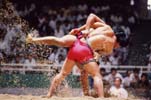
Wrestling
Enhance focus, confidence, and mental toughness with targeted wrestling mental training.

Boxing
Enhance focus, confidence, and mental toughness with targeted boxing mental training.

Martial Arts
Enhance focus, confidence, and mental toughness with targeted martial arts mental training.

All Sports Hypnosis Programs
Discover our full collection of sports hypnosis products, with easy access to detailed information on each program.