




Every wrestling coach talks about staying aggressive. Attack first, dictate the pace, make the match happen on your terms. The advice is correct and every wrestler who has competed seriously knows it. The problem is not understanding the principle. The problem is that under real competitive pressure - when the score is tight, when the period is running out, when the opponent is better than expected - the aggression that flows naturally in practice has a way of transforming into something else entirely.
Sometimes it becomes panic - frantic, uncontrolled movement that creates more scoring opportunities for the opponent than it does for you. Sometimes it disappears altogether, replaced by the kind of defensive, reactive wrestling that waits for something to happen rather than making something happen. And sometimes it stays present but loses its quality - becoming rushed, telegraphed, and easy to counter because the subconscious urgency behind it has removed the patience and timing that made it effective.
Controlled aggression - the specific quality of staying offensive, purposeful, and composed under pressure simultaneously - is one of the most valuable and most difficult qualities to develop in wrestling. It requires a subconscious that has been trained to hold two things in balance at once: the drive to attack and the calm to attack well. And that balance does not happen by accident.
"Panic and passivity are opposite responses to the same thing - pressure that the subconscious has not been trained to handle. Controlled aggression is what happens when it has."
Why Aggression and Panic Feel Similar From the Inside
One of the reasons controlled aggression is genuinely difficult to maintain under pressure is that panic and aggression share the same physiological fuel. Both are driven by elevated adrenaline and cortisol. Both involve high physical intensity and fast movement. From inside the nervous system, they can feel almost identical - which is why so many wrestlers who intend to stay aggressive find themselves in panic-mode without clearly understanding how they got there.
The difference between the two is not the level of arousal. It is the quality of decision-making that sits on top of that arousal. Controlled aggression happens when the arousal is high but the attentional field remains open - when the wrestler can still read the opponent's positioning, still time their setups, still commit to attacks with the patience to let them develop. Panic happens when the arousal has narrowed attention to the point where the wrestler is reacting rather than reading, rushing rather than timing, creating activity rather than creating opportunities.
The switch from one to the other happens subconsciously and automatically - triggered by the specific conditions of the match situation. And because it is subconscious and automatic, managing it requires subconscious training rather than conscious effort in the moment.
The Pressure Triggers That Kill Controlled Aggression
Controlled aggression does not usually collapse all at once. It erodes through specific triggers - match situations that the subconscious reads as high-threat and responds to by shifting from the open, opportunistic state that supports good offensive wrestling into the narrowed, reactive state that produces either panic or passivity.
The most common triggers vary between wrestlers but tend to follow predictable patterns:
- Being behind on points with limited time. The subconscious reads this as urgent and responds with the urgency of panic rather than the urgency of controlled pressure - producing rushed attacks that arrive without setup and are easy to counter or avoid.
- Facing a higher-ranked or more experienced opponent. The subconscious threat assessment elevates before the match has begun, producing a defensive orientation that undermines the offensive intentions the wrestler arrived with.
- Missing a scoring opportunity. A failed shot or a blown reversal that should have scored activates frustration and self-criticism, narrowing attention and reducing the patience that the next attack requires.
- Feeling physically dominated. When an opponent's strength or speed is registering clearly, the subconscious may begin shifting resources from offensive planning to defensive survival - producing the retreat into caution that cedes the initiative entirely.
Recognizing your own specific triggers is the first step. The second is training the subconscious response to those triggers so that instead of producing panic or passivity, they produce the escalation of controlled, purposeful aggression that the situation actually calls for.
The Patience Paradox in Offensive Wrestling
One of the counterintuitive truths about effective offensive wrestling is that the best attacks are often the most patient ones. The setup that is rushed arrives too early and is read. The shot that fires before the level change is complete gives the opponent time to sprawl. The attack that comes from frustration rather than opportunity creates a scramble the attacker did not design and may not win.
Controlled aggression requires patience - the ability to stay in an attacking mindset, to keep the pressure on the opponent continuously, without pulling the trigger until the moment is actually right. This patience is not passivity. It is the active, intentional management of competitive tension - maintaining the pressure that creates openings while waiting for the opening that is worth taking.
Under the stress of a tight match this patience is among the first qualities to disappear, because the urgency of the situation and the impatience of the stress response push toward premature action. Training the subconscious to maintain patient aggression under pressure - to keep the attacking intent without rushing the execution - is one of the most specific and most valuable mental performance interventions available to any wrestler.
Building Controlled Aggression Through Subconscious Training
In the deeply relaxed hypnotic state, the subconscious is receptive to new associations and new automatic responses in a way that ordinary practice cannot fully replicate. You can rehearse the specific pressure situations that trigger panic or passivity in your wrestling - the being down on points, the difficult opponent, the missed opportunity - and practice the response of controlled, patient, purposeful aggression until that response becomes the automatic output rather than the exceptional one.
The rehearsal encodes not just the action but the internal state that makes the action possible. The calm beneath the intensity. The open attention alongside the physical drive. The patience within the aggression. These qualities are experienced vividly in the rehearsal and encoded at the subconscious level - making them available automatically in competition rather than requiring conscious effort to maintain under pressure that will override any consciously held intention.
Alongside the situational rehearsal, the identity work matters. Building the subconscious identity of a wrestler whose aggression is a controlled weapon rather than a reactive response - who is known for the quality of their offensive wrestling under pressure rather than the quantity of their panicked activity - shapes the automatic response to pressure situations at the deepest level.
Controlled aggression is not a technique. It is a subconscious state - one that can be trained, deepened, and made so automatic that pressure becomes the cue for it rather than the thing that takes it away.

🤼 Wrestling Mental Performance Program - A dedicated subconscious mind training program for wrestlers covering controlled aggression, panic management, pressure response training, and the offensive mindset that stays sharp and purposeful when the match is on the line.
🎯 Personalized Sports Hypnosis Recording - A fully personalized session built around your specific aggression patterns under pressure, your panic triggers, and the controlled offensive wrestler you are working to become.
🎯 New to Relaxation / Self-Hypnosis?
Our complementary 12 Minute Relaxation provides a guided recording perfect for starting out, or for anyone wanting quick light relaxation. More free downloads also on this page, for sleep etc.

🎧 Recommended Programs for This Topic
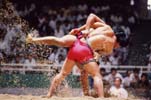
Wrestling
Enhance focus, confidence, and mental toughness with targeted wrestling mental training.

Boxing
Enhance focus, confidence, and mental toughness with targeted boxing mental training.

Martial Arts
Enhance focus, confidence, and mental toughness with targeted martial arts mental training.

All Sports Hypnosis Programs
Discover our full collection of sports hypnosis products, with easy access to detailed information on each program.