


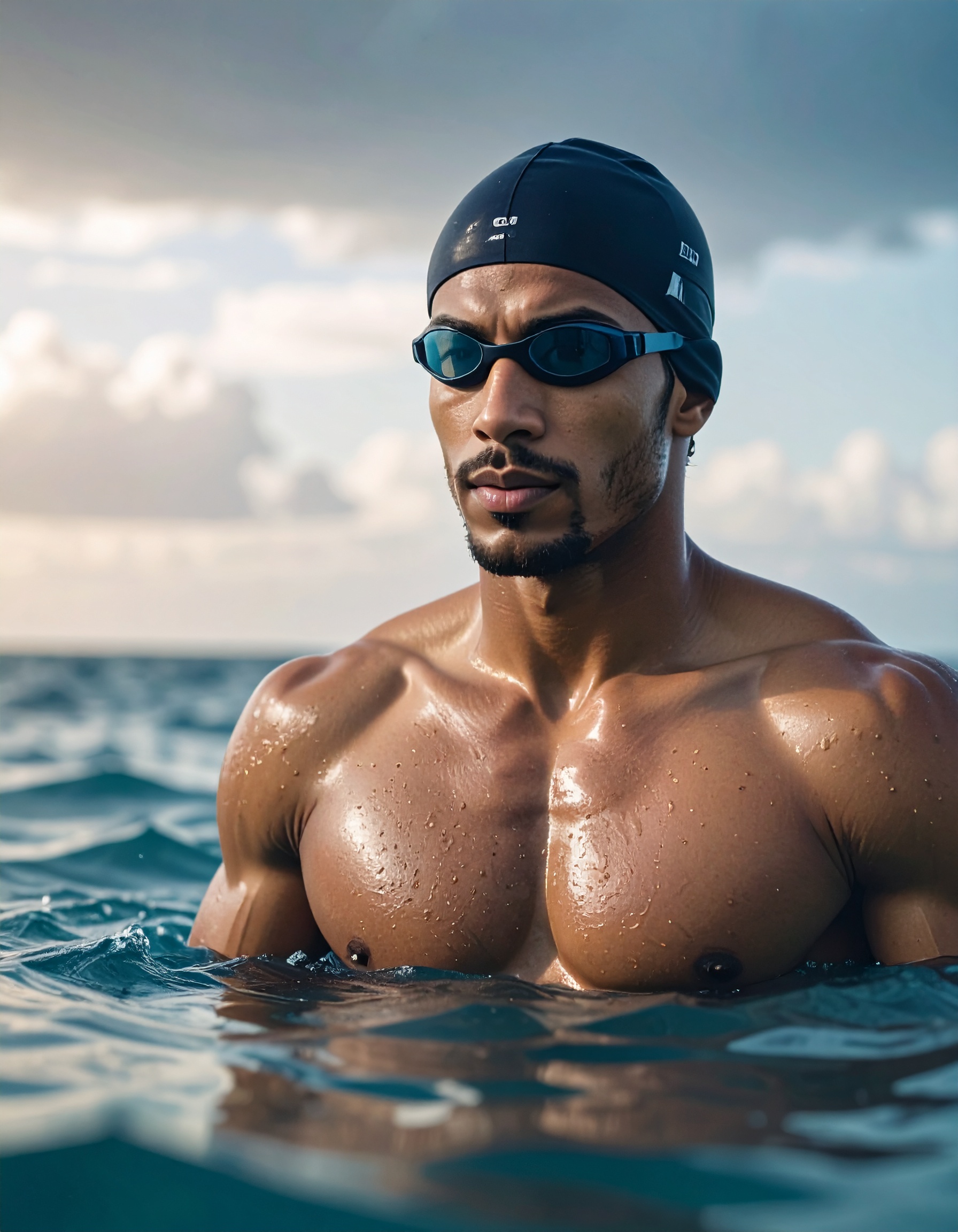
Open water swimming asks things of the mind that pool swimming simply does not. The controlled, predictable, temperature-regulated environment of a pool is replaced by something altogether more demanding - cold that bites from the first stroke, currents that push against hours of preparation, visibility that may extend only a few feet, and a horizon that can feel like it never gets closer no matter how long you have been moving toward it.
The physical training for open water swimming is substantial. The hours in the pool, the strength work, the technique refinement, the progressive cold exposure - these are the visible, measurable investments that most swimmers focus on and that form the foundation of performance. And they are essential. Without the physical preparation, nothing else matters.
But ask any experienced open water swimmer where races are really decided - where the training either holds or falls apart, where the difference between a good performance and a great one lives - and the answer is almost always the same. The mind. Specifically, the subconscious relationship with cold, discomfort, fear, and the particular kind of sustained mental endurance that open water demands across distances and conditions that the pool never prepares you for.
The swimmer who has trained their mind as deliberately as their body does not just perform better under difficult conditions. They experience those conditions differently - and that difference, in open water, is the difference that matters most.
The Cold Water Challenge
Cold water immersion is the first and most immediate mental challenge of open water swimming - and the one that most clearly demonstrates the power of the subconscious over the physical experience.
The physiological response to cold water entry is automatic and powerful. The cold shock response - the sharp inhalation, the elevated heart rate, the immediate peripheral vasoconstriction - is a hardwired survival response that the body generates regardless of conscious intention or preparation level. You cannot will it away. What you can change, through deliberate mental training, is the psychological relationship with it.
The untrained mind experiences cold shock as an emergency. The subconscious registers the intensity of the physical response and generates a corresponding threat assessment - this is dangerous, this needs to stop, the appropriate response is to exit the situation. This assessment is not irrational. It is the subconscious doing its job with the information it has been given.
The trained mind has a different relationship with the same physiological event. The cold shock is acknowledged - felt, not suppressed - but processed as a known, expected, temporary response rather than as an emergency requiring action. The subconscious has been prepared for this. It knows what is coming. It knows the shock response peaks within approximately ninety seconds and subsides as the body adapts. It knows this is not danger but discomfort - and it has been trained to hold that distinction clearly under conditions that would otherwise collapse it.
"Cold water does not get easier with mental training. The temperature is the temperature. What changes is the subconscious assessment of what the cold means - and that assessment determines everything about how the swimmer experiences and responds to it."
Pain, Discomfort, and the Subconscious Tolerance
Beyond the initial cold shock, open water swimming produces a sustained physical discomfort that accumulates across the duration of a swim in ways that become increasingly mentally demanding as the distance and time extend. Muscle fatigue, the particular ache of sustained cold exposure, the physical stress of fighting currents or chop - none of these are avoidable, and all of them eventually reach a level where the mind becomes the primary variable determining whether the swimmer continues at the same intensity or begins to negotiate.
The negotiation is the enemy. Every experienced open water swimmer knows the internal conversation that begins at a certain point - the quiet, persistent voice that begins constructing reasonable-sounding cases for slowing down, for taking a wider line, for conserving for the finish that is still some distance away. This negotiation is not weakness. It is the subconscious doing what it was designed to do - seeking relief from sustained discomfort through the most available mechanism, which in open water is almost always a reduction in effort.
Mental training addresses this not by suppressing the negotiation but by changing the subconscious relationship with discomfort itself. Through deliberate work at the theta level - the deep, receptive state where subconscious programming is most accessible - the pain tolerance can be genuinely extended. Not through gritted-teeth willpower. Through a genuine update in how the subconscious processes sustained physical challenge - reframing it from threat to effort signal, from something to be escaped to something to be inhabited, from evidence that the limit has been reached to information that the swimmer is working at the level they came to work at.
- Untrained subconscious: sustained discomfort equals threat signal equals reduction in effort
- Trained subconscious: sustained discomfort equals effort signal equals maintained or increased output
- The physical sensation is identical in both cases
- The subconscious interpretation determines the behavioral response
- The behavioral response determines the performance outcome
Fear and the Open Water Environment
Open water introduces a dimension of fear that pool swimming never produces - and that significantly affects performance for a larger proportion of swimmers than most are willing to openly acknowledge. The fear is not always dramatic or clearly defined. Sometimes it is the specific, identifiable fear of deep water, of what cannot be seen below. Sometimes it is the more diffuse anxiety of being far from the shore, of the distance between the current position and the safety of land. Sometimes it is the claustrophobia of a mass start, of bodies and turbulence and the loss of the clear lanes and predictable space that pool swimming provides.
Whatever its specific content, fear in open water produces the same neurological consequences in performance terms. The sympathetic nervous system activates. Breathing becomes shallower and less controlled - directly affecting stroke rhythm and oxygen efficiency. Muscle tension increases - increasing drag and reducing the fluidity of movement. The attentional focus narrows to the feared element rather than remaining on the process of swimming efficiently.
Mental training addresses open water fear at the subconscious level - where the fear is actually generated - rather than through the conscious reassurance that experienced swimmers have usually already tried and found insufficient. Desensitization at the subconscious level, through the kind of deep relaxation and targeted suggestion that hypnosis provides, genuinely reduces the threat assessment that produces the fear response. The open water environment does not change. The subconscious response to it does.
Motivation Across Distance and Time
One of the most specific mental challenges of open water swimming - particularly at longer distances - is the maintenance of motivation and competitive intent across a duration that is long enough for the mind to become genuinely fatigued independently of the body. The physical engine may have more to give. The mental engine, if untrained, reaches a point of depletion that reduces output as surely as any physiological limit.
This mental fatigue expresses itself in several recognizable ways. The loss of pace awareness - no longer actively managing effort against a target but simply surviving the remaining distance. The shift from racing to finishing - the subconscious decision, made below conscious awareness, that the goal has changed from performing well to simply completing. The difficulty maintaining the quality of focus that efficient open water navigation requires - the sighting frequency dropping, the line becoming less precise, the stroke technique deteriorating in ways that increase the energy cost of every metre.
Mental training builds the motivational endurance that sustains competitive intent across the full duration of the swim - not through pep talks or mantras, but through a genuine subconscious orientation toward the race that does not deplete across time the way consciously maintained motivation always eventually does.
The Pre-Race Mind
The mental game of open water swimming begins well before the water. The pre-race period - the morning of, the hours before the start, the minutes standing on the beach or the pontoon - is when the subconscious is building its assessment of the day ahead. And that assessment, formed before a stroke has been taken, shapes the neurological conditions from which the entire swim will be conducted.
The swimmer who arrives at the start line carrying significant anxiety - about the conditions, the cold, the distance, the competition - begins the race with a sympathetic nervous system already partially activated. The cortisol is already elevated. The breathing is already slightly shallow. The mental bandwidth available for the race itself is already partly occupied by anxiety management. And all of this is before the cold shock of entry has even been encountered.
Deliberate pre-race mental preparation - the development of a consistent routine that reliably produces the optimal mental state at the start - is one of the highest-leverage mental performance investments an open water swimmer can make. Not a casual positive affirmation but a genuine subconscious preparation that arrives at the water's edge with the nervous system already in the state that the race requires: calm, focused, ready, and genuinely expecting to perform.
Sighting, Navigation, and Cognitive Clarity Under Fatigue
Open water swimming requires cognitive function - navigation, sighting, tactical awareness of position relative to other swimmers and to the course - to be maintained under conditions of physical fatigue that progressively impair it. The swimmer who makes poor navigation decisions in the second half of a race is not necessarily less intelligent or less experienced than one who navigates well. They are more cognitively depleted - and the depletion is substantially a product of the anxiety and mental effort load they have been carrying alongside the physical demands of the swim.
A less anxious mind is a clearer mind under fatigue. The cognitive resources that an anxious swimmer is spending on managing the threat assessment of their environment are resources unavailable for the navigation, pacing, and tactical decisions that race performance depends on. Mental training that reduces the anxiety load therefore produces cognitive performance benefits that extend well beyond the direct experience of the anxiety itself.
Building the Open Water Mind
The mental training that makes a genuine difference in open water swimming is not motivational content or positive thinking. It is deliberate subconscious work - carried out in the deep theta state where the subconscious is most receptive, and targeted specifically at the cold tolerance, pain reframing, fear desensitization, motivational endurance, and pre-race preparation that open water uniquely demands.
This training is ideally done regularly, in the same way that physical training is done regularly - building the subconscious capacity over time rather than attempting a single intervention before a major race. The swimmers who use it most effectively tend to incorporate it into their training routine as a fourth dimension alongside swimming, strength work, and recovery - recognizing that the mental component is not a supplement to the preparation but an integral part of it.
What they report, consistently, is not that the open water became easier or less demanding. The cold is still cold. The distance is still the distance. The discomfort is still present and real. What changes is their relationship with all of it - the subconscious stance toward the challenge that determines whether difficulty is experienced as threat or as the very thing they came to meet.
The open water does not care about your preparation. But your subconscious does. And a subconscious that has been genuinely prepared for what the water asks of it produces a swimmer who is capable of far more than physical fitness alone ever delivered.
 🏊 Open Water Swimming Hypnosis Program
Build the mental foundation that open water swimming demands - cold tolerance, pain reframing, fear desensitization, motivational endurance, and the pre-race mental preparation that puts your subconscious on your side from the first stroke to the finish.
Learn more about the Open Water Hypnosis Program →
The Freedom from Anxiety Program dissolves stress, worry and overwhelm at the deepest subconscious level with a powerful 4-track hypnosis system.
The Deep Focus & Concentration Program is a 5-track subconscious system designed to build deep work states, concentration, and sustained mental clarity for high-performance focus.
🎯 Need Something More Personalized?
While our pre-made programs are effective for most people, if your situation feels more complex, deeply embedded, or highly personal than what a general program can address, a tailored approach may offer a deeper level of support. Our Custom Hypnosis Recordings are personally designed for you, giving you the flexibility to target your specific goals and challenges through carefully engineered layered audio tracks, theta brainwave entrainment, binaural beats, and NeuroFrequency Programming™ - to guide the mind into deeply relaxed, highly receptive states where positive subconscious changes occur more naturally.
🎯 New to Relaxation / Self-Hypnosis?
Our complementary 12 Minute Relaxation provides a guided recording perfect for starting out, or for anyone wanting quick light relaxation. More free downloads also on this page, for sleep etc.

🎧 Recommended Programs for This Topic

Mind Training for Open Water Swimmers Program
Improve race focus, pacing control, and confidence in water with subconscious training designed for pool and open-water performance.

Triathlon Program
Strengthen mental endurance, transition focus, and race resilience across swim, bike, and run with integrated subconscious conditioning.

Distance Running
Enhance endurance, sharpen mental focus, and maintain steady pace under pressure with proven visualization techniques for runners.
Shop
See our entire selection of powerful hypnotic sports programs