
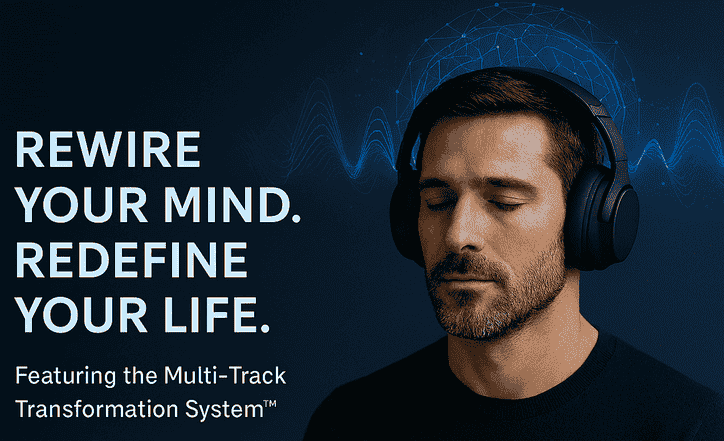



If you have spent any significant time lying awake at 2am, you already know that insomnia is not simply the absence of sleep. It is an active state - a brain that is fully, frustratingly alive when every signal from the body says it should be shutting down. The racing thoughts. The physical restlessness. The hyper-awareness of every small sound. The clock watching. The calculation of exactly how many hours of sleep you will get if you fall asleep right now - which, of course, makes falling asleep even harder.
Most people treat insomnia as a sleep problem and look for solutions in that direction: sleep hygiene, medication, supplements, white noise, blackout curtains. Some of these help some of the time. But none of them address the actual mechanism driving chronic insomnia, because chronic insomnia is not primarily a sleep problem at all. It is a subconscious hyperarousal problem - and that distinction changes everything about how it should be treated.
What Sleep Actually Is - and Why It Gets Disrupted
Sleep is not a passive state the brain falls into when consciousness is switched off. It is an active, highly organised neurological process governed by two competing systems: the circadian rhythm (the 24-hour biological clock driven by light exposure and melatonin) and sleep pressure (the progressive build-up of adenosine in the brain that creates the physical drive to sleep). When both systems are functioning well and the arousal system is appropriately quiet, sleep arrives naturally.
The problem is the third system - the arousal system - which in chronic insomnia has learned to override the other two. Governed largely by the locus coeruleus, the amygdala, and the HPA axis stress response, the arousal system keeps the brain in a state of alertness that is neurologically incompatible with sleep onset. It does not matter how tired you are, how dark the room is, or how many hours of sleep pressure have accumulated. If the arousal system is running at high volume, the sleep systems cannot compete.
🧠 The core mechanism: In chronic insomnia, the brain has typically developed a conditioned hyperarousal response to the sleep environment itself. The bedroom, the act of getting into bed, and the attempt to sleep have all become associated - through repeated nights of frustrated wakefulness - with alertness rather than relaxation. The subconscious has learned that bedtime means threat, and it responds accordingly. This is not a conscious decision. It is an automatic subconscious pattern that no amount of relaxation advice touches, because the conditioning runs below the level of conscious intention.
The Architecture of a Good Night's Sleep
Understanding what healthy sleep looks like makes it easier to understand exactly where insomnia disrupts it - and what restoring it actually means.
Light Sleep
The transition from wakefulness. Brain waves slow. Muscles relax. Easily disrupted. Lasts 5–10 minutes.
Core Sleep
Heart rate and temperature drop. Sleep spindles appear - bursts of neural activity that block external stimuli and protect sleep continuity.
Deep Sleep
Slow-wave sleep. Physical restoration, immune function, memory consolidation. Hardest to wake from. Most restorative stage.
Dream Sleep
Emotional processing, creativity, learning consolidation. Brain highly active. Cycles lengthen through the night - most abundant in the final hours.
Insomnia disrupts this architecture in multiple ways simultaneously - delaying sleep onset, reducing deep sleep, fragmenting REM cycles, and causing early morning waking. The result is not just tiredness but a cascade of cognitive, emotional, and physical consequences that compounds with every successive poor night.
The Vicious Cycle: How Insomnia Maintains Itself
Acute insomnia - a few bad nights triggered by stress, illness, or disruption - is normal and self-limiting. Chronic insomnia is something different. It is a self-perpetuating loop in which the experience of not sleeping creates the very conditions that prevent sleeping, which creates more experience of not sleeping, which tightens the loop further.
Evening Anticipatory Anxiety
As bedtime approaches, the subconscious begins anticipating another night of frustrated wakefulness. Cortisol and norepinephrine begin rising hours before bed - the arousal system pre-activating in response to the conditioned threat of bedtime.
Conditioned Arousal in Bed
The bedroom environment itself triggers the arousal response. The subconscious has associated the act of lying in bed with wakefulness, and automatically fires the alert state that blocks sleep onset - regardless of how tired the person feels.
Clock Watching and Catastrophising
Awareness of the time generates calculation ("I have four hours left if I fall asleep now") and catastrophising ("I cannot function tomorrow"). Each thought amplifies the arousal response further - making sleep progressively less accessible the harder it is pursued.
Morning Fatigue and Dread
The exhausted morning-after state reinforces the subconscious belief that sleep is unavailable and dangerous to rely on. The anticipatory anxiety for the following night begins almost immediately - completing the loop.
Why Standard Approaches Fall Short
❌ What Doesn't Address the Root
- Sleep hygiene rules - helpful but don't touch conditioned hyperarousal
- Sleeping pills - suppress symptoms without changing the subconscious pattern; dependency risk; rebound insomnia on stopping
- Counting sheep / relaxation apps - conscious techniques competing against a subconscious arousal system
- Forcing an earlier bedtime - puts the person in the conditioned arousal environment for longer
- Positive thinking about sleep - the subconscious has its own evidence base and is unimpressed by affirmations
✓ What Actually Changes the Pattern
- CBT-I (Cognitive Behavioural Therapy for Insomnia) - the gold standard, addresses conditioned arousal directly
- Hypnosis - reconditions the subconscious arousal response at its root, faster and more directly than CBT-I alone
- Stimulus control - rebuilding the brain's association between bed and sleepiness
- Stress and anxiety treatment - addressing the upstream emotional drivers of HPA axis dysregulation
- Sleep restriction therapy - temporarily deepens sleep pressure to rebuild sleep drive
📌 On sleeping pills: Prescription sleep medication has a legitimate short-term role in acute insomnia - disrupting the cycle long enough to break the worst of the conditioned arousal pattern. The problem is that they do not produce natural sleep architecture, they carry dependency and tolerance risks, and they address none of the subconscious conditioning that maintains chronic insomnia. Most sleep specialists now recommend CBT-I and hypnosis-based approaches as first-line treatments for chronic insomnia.
How Hypnosis Addresses Insomnia
The relationship between hypnosis and sleep is deeply natural - and neurologically significant. The deeply relaxed alpha-theta brainwave state that hypnosis produces is the same state the brain passes through in the minutes before sleep onset. In this sense, hypnosis is not an artificial intervention applied to the sleep system from outside. It is a guided deepening of the same neurological transition that sleep requires.
But the therapeutic value of hypnosis for insomnia goes well beyond simple relaxation. It operates through three distinct mechanisms that address the actual architecture of chronic insomnia.
- Conditioned arousal reconditioning. In the hypnotic state, the subconscious association between bed, darkness, and arousal - the conditioned response that is the engine of most chronic insomnia - becomes directly accessible and amenable to change. Through targeted suggestion, the brain's automatic evaluation of the sleep environment can be genuinely recalibrated from threat to safety. When this reconditioning takes hold, the bed becomes what it is supposed to be: a reliable cue for the transition to sleep rather than a trigger for hyperarousal.
- HPA axis deactivation. The deep physical relaxation of the hypnotic state directly counteracts the cortisol and norepinephrine elevation that maintains the arousal response. Regular practice in this state recalibrates the HPA axis toward a lower baseline - meaning the arousal system arrives at bedtime at a lower starting point, requiring less neurological distance to travel before sleep becomes accessible.
- Sleep confidence restoration. One of the most debilitating aspects of chronic insomnia is the collapse of sleep confidence - the subconscious conviction that sleep is unreliable, fragile, and likely to fail. This conviction is itself a source of anticipatory anxiety that perpetuates the problem. Guided imagery in the hypnotic state can rebuild the subconscious expectation of sleep as natural, reliable, and available - breaking the anticipatory anxiety loop at its root.
📊 What the research shows: A meta-analysis of hypnosis studies for insomnia found consistent improvements across sleep onset latency, total sleep time, wake time after sleep onset, and sleep quality ratings - with effect sizes comparable to CBT-I and significantly superior to placebo. Crucially, unlike medication, the benefits of hypnotic intervention tend to improve further after the treatment period ends, as the subconscious reconditioning continues to consolidate.

🌙 Ready to Recondition Your Brain for Natural, Reliable Sleep?
🌙 The Insomnia & Sleep Hypnosis Program works directly with the subconscious patterns keeping you awake - calming overactive arousal, deactivating the stress response, and rebuilding your brain’s expectation that sleep is natural and easily available. It’s designed for bedtime, guiding your brain through the exact neurological steps it needs to transition into restful sleep.
🎯 Start tonight for free: The Drift to Sleep MP3 - a free guided recording that gently guides your brain from the waking state into deep, natural sleep. Many users fall asleep before it even finishes.
The Cost of Untreated Insomnia - Why This Matters
Chronic insomnia is not merely uncomfortable. Its downstream effects on health, cognitive function, emotional regulation, and physical wellbeing are well-documented and substantial - and they compound over time in ways that make the underlying insomnia progressively harder to treat.
- Cognitive function. Sleep is when the brain consolidates memories, clears metabolic waste products through the glymphatic system, and restores the prefrontal cortex's capacity for decision-making and emotional regulation. Chronic sleep deprivation measurably impairs all of these functions - producing deficits in attention, working memory, and executive function that accumulate with each successive poor night.
- Emotional regulation. The amygdala - the brain's emotional threat-detection centre - becomes significantly more reactive after sleep deprivation, while prefrontal modulation of the amygdala response weakens. The practical result is greater emotional volatility, lower stress tolerance, and a reduced capacity to maintain perspective under pressure.
- Physical health. Chronic insomnia is associated with elevated inflammatory markers, impaired immune function, increased cardiovascular risk, and dysregulation of appetite hormones - the last of these being one reason why persistent sleep deprivation is so frequently accompanied by weight gain and difficulty losing weight.
- Mental health. The relationship between insomnia and depression and anxiety runs in both directions - each worsens the other in a mutually reinforcing loop. Treating insomnia often produces meaningful improvement in anxiety and mood even before other interventions are introduced.
Practical Steps: What to Do Tonight
- Stop trying to sleep. The effort to force sleep activates the arousal system. Give yourself permission to rest without the goal of sleeping - paradoxical intention reduces the performance anxiety that amplifies conditioned arousal.
- Reserve the bed for sleep only. Stimulus control - using the bedroom exclusively for sleep - begins to rebuild the subconscious association between the environment and sleepiness rather than arousal.
- Get up if you are not asleep within 20 minutes. Lying awake in bed deepens the conditioned arousal association. Going to another room until genuinely sleepy breaks the conditioning over time.
- Stop clock-watching. Time awareness during wakefulness directly amplifies the catastrophising cycle. Turn the clock away or remove it from the room entirely.
- Use guided audio at bedtime. The Drift to Sleep MP3 is specifically designed to guide your brain through the transition into sleep - providing the subconscious with a reliable pathway into the state it needs to reach.
- Address the upstream drivers. If anxiety, stress, rumination, or unresolved emotional tension are the fuel for the arousal system, addressing them directly - through hypnosis, therapy, or both - reduces the arousal load that the sleep system is trying to overcome.
🎧 Want a Program Built Around Your Specific Sleep Pattern?
Insomnia presents differently for everyone - some people struggle to fall asleep, others wake repeatedly through the night, others wake early and cannot return to sleep. Our customized hypnosis recordings are built specifically around your individual pattern, your specific anxiety drivers, and the subconscious reconditioning most likely to restore genuinely restful sleep for you.
📚 Related Programs & Articles

Insomnia & Sleep Program
Subconscious reconditioning for natural, reliable sleep - designed for bedtime use.
Deep Meditation Program
Addresses the upstream HPA axis dysregulation that keeps the arousal system running at night.

Stress & the Body
How chronic stress and cortisol dysregulation feed directly into insomnia - and what changes when they are addressed.

The Amygdala & Fear
The same amygdala hyperreactivity that creates anxiety is the engine of conditioned insomnia arousal.