
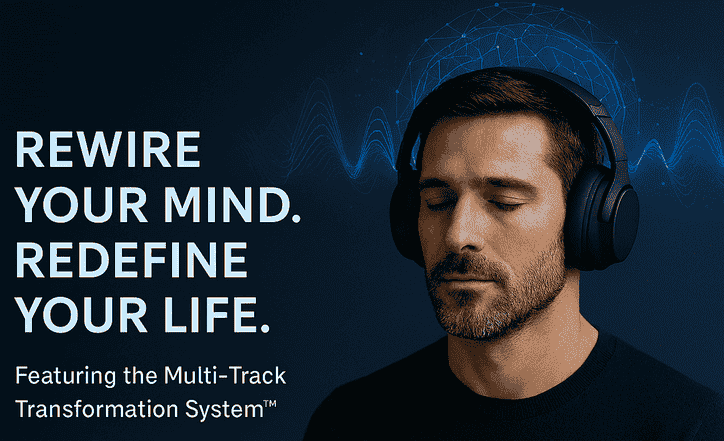




Understanding Hypnosis and Weight Loss
When it comes to losing weight, most people immediately think of diet, exercise, and willpower. But the mind plays a far more powerful role than most of us realize. In fact, one large meta-analysis of hypnosis-based therapies found that people who used hypnosis improved more than about 70% of those using the same treatment without it—with even stronger effects appearing over time. [1](https://joymind.com/wp-content/uploads/2025/06/Hypnosis-as-an-Adjunct-to-CBT-1995.pdf)
Hypnosis has been promoted as a tool to help people change eating habits, manage cravings, and even alter the body’s response to food. But does it really work? And what does the research actually say?
Before we dive in, it’s important to understand what hypnosis is. Hypnosis is a state of focused attention, heightened suggestibility, and deep relaxation. In this state, the subconscious mind becomes more receptive to suggestions. For weight loss, these suggestions typically focus on healthier eating, increased motivation for exercise, and shifting the emotional relationship with food.
One of the reasons hypnosis is appealing is that it doesn’t require willpower alone. Instead of forcing yourself to resist cravings, hypnosis works to reprogram the mental patterns that drive those behaviors. This subtle shift can make long-term changes easier and more sustainable.
“Hypnosis is a way of training attention.” - Dr. David Spiegel
Research Snapshot
• Hypnosis + therapy outperformed ~70% of non-hypnosis treatments (Kirsch et al.)
• Long-term weight loss improvements were stronger when hypnosis was included
• Nearly 68% of participants improved disinhibited eating with hypnosis vs 11% control

How Hypnosis Can Influence Eating Habits
At its core, hypnosis for weight loss targets the subconscious mind. Most eating habits are deeply rooted in automatic patterns: stress eating, late-night snacking, emotional triggers, and mindless consumption.
Neuroscience shows that these behaviours are not just “bad habits”—they are reinforced brain circuits. The brain’s dopamine system plays a central role in food cravings, driving motivation and reward-seeking behaviour, often overriding hunger signals. [2](https://pmc.ncbi.nlm.nih.gov/articles/PMC8090468/)
During a hypnosis session, the practitioner might guide you to mentally rehearse making healthy choices, feeling satisfied sooner, or responding differently to triggers. Over time, this repetition strengthens new neural pathways, allowing healthier decisions to feel more natural rather than forced.
What you repeatedly imagine, your brain begins to treat as familiar—and eventually automatic.
Some studies suggest hypnosis may reduce emotional eating and impulsive food choices by changing how the brain responds to food cues. Instead of reacting automatically, the response becomes more regulated and intentional.
Importantly, hypnosis is not magic. It works best when combined with conscious efforts like making healthier food choices, staying active, and tracking progress.
In Practice
In 30 years of working with clients, I have consistently observed that emotional eating is rarely about hunger. It’s usually a conditioned response to stress, boredom, or identity patterns. Once that subconscious association shifts, behaviour change becomes noticeably easier and more consistent.
What the Research Actually Says
Scientific interest in hypnosis for weight loss has grown steadily. Multiple clinical studies have explored its effectiveness, often comparing hypnosis plus standard weight loss programs to standard programs alone.
A well-known meta-analysis led by Harvard researcher Dr. Irving Kirsch found that adding hypnosis improved outcomes significantly, with sustained results continuing even after treatment ended. [1](https://joymind.com/wp-content/uploads/2025/06/Hypnosis-as-an-Adjunct-to-CBT-1995.pdf)
More recent clinical findings show that hypnosis can reduce impulsive eating behaviours, with some studies reporting that a majority of participants normalized unhealthy eating patterns after structured hypnosis training. [3](https://laneblog.stanford.edu/author/Hypnosis-for-Weight-Loss/)
It is important to note that hypnosis is not a standalone cure. The strongest results occur when it supports existing strategies like nutrition, movement, and behavioural change.
The key takeaway is simple: hypnosis strengthens the mental side of weight loss—the part most people struggle with the most.

Why the Mind Matters in Weight Loss
Weight loss is often seen as a physical challenge, but in reality, it’s largely neurological. Your habits, cravings, and emotional triggers are wired into your brain through repetition.
Neuroplasticity research shows that the brain continuously rewires itself based on repeated thoughts and behaviours—meaning unhealthy patterns can be changed with the right input over time. [4](https://www.frontiersin.org/journals/psychology/articles/10.3389/fpsyg.2022.831819/full)
- Portion control: Feeling satisfied with less.
- Craving management: Less emotional reactivity to food.
- Exercise motivation: Greater internal drive to move.
- Emotional resilience: Reduced dependence on food for comfort.
By retraining the subconscious mind, these behaviours eventually become automatic—removing the constant mental effort that causes most diets to fail.
Final Thoughts
Weight loss is as much a mental challenge as it is physical. Hypnosis offers a scientifically supported way to align the subconscious mind with your goals, reduce cravings, improve motivation, and make healthier habits stick.
When you understand that your brain is constantly adapting—and that habits are learned patterns rather than fixed traits—you realize something powerful:
Lasting weight loss is not about discipline. It’s about conditioning.
This is where subconscious conditioning and NeuroFrequency Programming™ come together. By repeatedly guiding the brain into receptive states and reinforcing new patterns, you are not just trying to change behaviour—you are rewiring the system that drives it.
And when that system changes, everything else becomes easier.