


Why Millions of People Listen to Binaural Beats
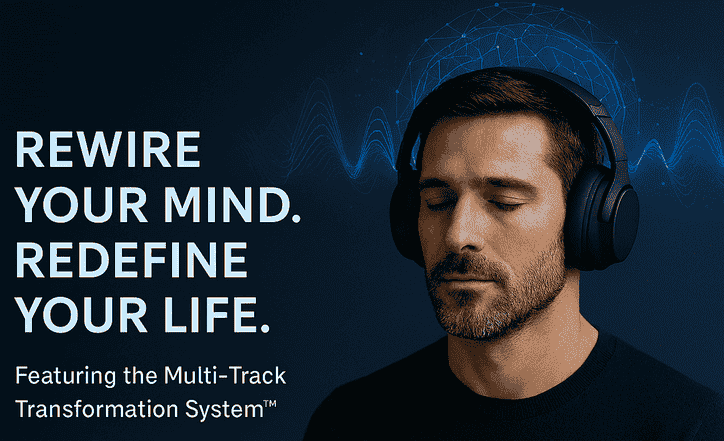
Binaural beats have become one of the most widely used forms of brainwave audio technology in the world. Millions of people use them while meditating, studying, relaxing, sleeping, visualizing, or listening to hypnosis recordings. Researchers have been studying binaural beats for decades, and while the claims made online sometimes stretch far beyond the evidence, the underlying phenomenon itself is real and scientifically measurable.
If you have ever listened to a hypnosis recording, meditation track, sleep program, or concentration soundtrack, there is a good chance binaural beats were part of the experience.
Yet many people still do not understand what they actually are.
Some believe they are a form of mind control.
Others assume they are nothing more than background noise.
The reality sits somewhere in the middle.
Here is the thing. Binaural beats are not magic. They are not a shortcut to instant enlightenment, unlimited intelligence, or overnight transformation.
What they may do is help encourage certain mental states by working with the way your brain naturally processes sound.
That possibility has made them particularly popular in fields such as hypnosis, meditation, stress reduction, peak performance training, and sleep improvement.
What Exactly Are Binaural Beats?
The concept is surprisingly simple.
When two slightly different frequencies are presented separately to each ear through headphones, your brain processes the difference between those frequencies as a third perceived rhythm.
For example, imagine your left ear receives a 200 Hertz tone while your right ear receives a 206 Hertz tone.
Your brain detects the six Hertz difference between them.
That six Hertz difference becomes the binaural beat.
You are not actually hearing a physical six Hertz sound wave.
Your brain is creating the perception internally.
This phenomenon was first described in 1839 by physicist Heinrich Wilhelm Dove, although modern interest in binaural beats did not emerge until much later when researchers began investigating how rhythmic stimulation might influence brain activity.
The important point is that binaural beats do not enter the brain from outside.
The effect is generated by the brain's own processing systems.
A binaural beat is not a sound you hear with your ears. It is a rhythm your brain creates internally when processing two slightly different frequencies.
How Binaural Beats May Influence Brain States
The theory behind binaural beats is based on a concept known as brainwave entrainment.
The idea is that rhythmic stimulation may encourage the brain to move toward a similar rhythm.
Your brain naturally produces different patterns of electrical activity depending on what you are doing.
Fast beta activity often dominates during active thinking and concentration.
Alpha activity frequently appears during relaxed wakefulness.
Theta activity often increases during hypnosis, meditation, visualization, and the transition toward sleep.
Delta activity dominates deep sleep.
Binaural beat creators often design recordings around these frequency ranges.
The goal is not to force the brain into a specific state.
The goal is to gently encourage conditions associated with that state.
Neuroscientist Dr. Richard Davidson, known for his work on meditation and brain activity, has shown that mental states correspond with measurable patterns of neural activity. This helps explain why researchers became interested in whether audio stimulation could influence those patterns.
The key word here is influence.
Not control.
Human brains are far too complex for simple audio tones to dictate exactly what happens.
Research Snapshot
• Binaural beats require headphones because each ear must receive a different frequency.
• Theta-range binaural beats are commonly used in hypnosis, meditation, and visualization recordings.
• Multiple studies have reported effects on relaxation, attention, mood, and anxiety, although outcomes vary.
Why Hypnosis Recordings Often Use Theta Binaural Beats
If you explore professional hypnosis recordings, you will notice that many incorporate theta-frequency binaural beats.
This is not an accident.
Theta brainwaves have long been associated with hypnosis, imagination, memory formation, creativity, and deeply absorbed states of attention.
Researchers such as Dr. David Spiegel at Stanford University have shown that hypnosis involves focused attention and reduced awareness of irrelevant distractions.
These characteristics often overlap with states where theta activity becomes more prominent.
Many hypnosis producers therefore use theta binaural beats to support the overall experience.
The beats themselves are not hypnosis.
The spoken suggestions remain the primary driver of change.
However, theta audio may help some listeners settle more quickly into a receptive state where those suggestions can be absorbed more effectively.
This is one reason theta binaural beats are commonly found in hypnosis recordings aimed at confidence building, anxiety reduction, performance improvement, habit change, and subconscious training.
What the Scientific Research Actually Says
The research on binaural beats is encouraging, but it is important to stay realistic.
Some studies have found improvements in relaxation, anxiety reduction, mood, concentration, and sleep quality.
Other studies have found smaller effects or mixed results.
This variability is common in psychological and neuroscience research because human beings differ significantly in how they respond.
Psychologist Dr. Irving Kirsch, known for his work on expectation effects and hypnosis, has highlighted the powerful role that belief and expectation can play in shaping outcomes.
This applies to binaural beats as well.
The listener's mindset, level of engagement, environment, and purpose for listening may all influence the experience.
Current evidence suggests that binaural beats may be a useful supportive tool.
Most researchers would stop short of claiming they are a miracle technology.
That balanced view is important.
The science is interesting enough without exaggerated promises.
Why Some People Notice Dramatic Results While Others Do Not
This is one of the most common questions people ask.
Why does one person report a profound experience while another notices very little?
Several factors may contribute.
First, some people naturally enter absorbed states more easily than others.
Second, listening environment matters.
Third, consistency matters.
Fourth, expectations matter.
And fifth, the quality of the recording matters enormously.
A poorly produced audio track with distracting sounds or weak content may produce disappointing results regardless of the technology used.
Conversely, a professionally designed hypnosis recording that combines effective suggestions, high-quality audio production, and carefully selected binaural frequencies may create a much more engaging experience.
This is why experienced practitioners rarely rely on binaural beats alone.
They use them as one component of a broader approach.
In Practice
In years of producing hypnosis and subconscious training recordings, I have consistently observed that the most effective programs combine multiple elements working together. The spoken content, the pacing, the emotional engagement, the listener's readiness for change, and supportive technologies such as binaural beats all contribute to the outcome. No single ingredient carries the entire process.
Understanding Binaural Beats Without the Hype
Binaural beats occupy an interesting space between neuroscience, psychology, meditation, and personal development.
They are neither the miracle technology sometimes portrayed online nor the meaningless gimmick their critics occasionally claim.
They are a real auditory phenomenon supported by measurable brain processing mechanisms.
The evidence suggests they may influence relaxation, attention, mood, and subjective mental states under certain conditions.
That alone makes them worth understanding.
Neuroscientist Dr. Michael Gazzaniga once summarized a broader truth about the brain when he said:
"The brain is a dynamic system."
Those five words capture an important principle.
Your mental state is not fixed.
Your attention is not fixed.
Your emotional state is not fixed.
Various inputs influence them continuously.
Binaural beats may be one of those inputs.
Not a magical one.
Not an all-powerful one.
But potentially a useful one when applied intelligently.
The most realistic view of binaural beats is also the most interesting one. They may help guide the mind toward useful states, but they work best as part of a larger process of learning, relaxation, and subconscious conditioning.
As research into brainwave activity, neuroplasticity, hypnosis, and attention continues to evolve, the evidence increasingly points toward a simple conclusion. The brain responds to patterns, rhythms, and repeated experiences. NeuroFrequency Programming™ incorporates this principle by combining hypnosis, subconscious training, and carefully engineered binaural beat environments designed to support focused attention, deep relaxation, and lasting personal change.

🔒 Related Solutions
All our programs use theta brainwave frequencies and binaural beats to guide your mind into the deeply receptive state where subconscious change actually occurs - the same state reached by experienced meditators, and the level at which hypnotic suggestion produces its most lasting results. Simply listen with headphones, relax, and let the recordings do the work.
🧠 Most Specific Program
The Confidence / Self Esteem Hypnosis Program works directly at the deepest subconscious level to bring about positive changes from the inside, out - which can bring a wide and ongoing range of benefits to your everyday life.
The Freedom from Anxiety Program dissolves stress, worry and overwhelm at the deepest subconscious level with a powerful 4-track hypnosis system.
The Deep Focus & Concentration Program is a 5-track subconscious system designed to build deep work states, concentration, and sustained mental clarity for high-performance focus.
🧘 Another Powerful Program
The Deep Meditation Program allows you to access the deepest levels of relaxation to allow inner peace and mental clarity to flow through every area of your life.
🎯 Need Something More Personalized?
While our pre-made programs are effective for most people, if your situation feels more complex, deeply embedded, or highly personal than what a general program can address, a tailored approach may offer a deeper level of support. Our Custom Hypnosis Recordings are personally designed for you, giving you the flexibility to target your specific goals and challenges through carefully engineered layered audio tracks, theta brainwave entrainment, binaural beats, and NeuroFrequency Programming™ - to guide the mind into deeply relaxed, highly receptive states where positive subconscious changes occur more naturally.
🎯 New to Relaxation / Self-Hypnosis?
Our complementary 12 Minute Relaxation provides a guided recording perfect for starting out, or for anyone wanting quick light relaxation. More free downloads also on this page, for sleep etc.

🎧 Recommended Programs for This Topic

Deep Focus & Concentration Program
5-track subconscious system designed to build deep work states, concentration, and sustained mental clarity for high-performance focus.

Confidence & Self Esteem
Strengthen yourself from within to build confidence, self esteem, resilience, and a positive self image.

Freedom from Anxiety Program
Dissolve stress, worry and overwhelm at the source, at the subconscious level, with this 4 track program.

Weight Loss
Create an automatic mindset of healthy living to naturally support your body, boost fat-burning habits, and achieve lasting weight loss.

Health & Healing
Harness the power of hypnosis and visualization to strengthen your health and immune system from the inside, out.

Custom Hypnosis Recordings
Tailored specifically to your goals, challenges, and personal circumstances — offering the most precise and individualized path to deep subconscious change.
Shop
See our entire selection of powerful hypnotic self help programs
What Is NeuroFrequency Programming™? Craig Townsend's Method Explained
Discover the multi-layered method that combines advanced hypnosis techniques with targeted brainwave frequencies to create deeper, faster, and more lasting subconscious change.