
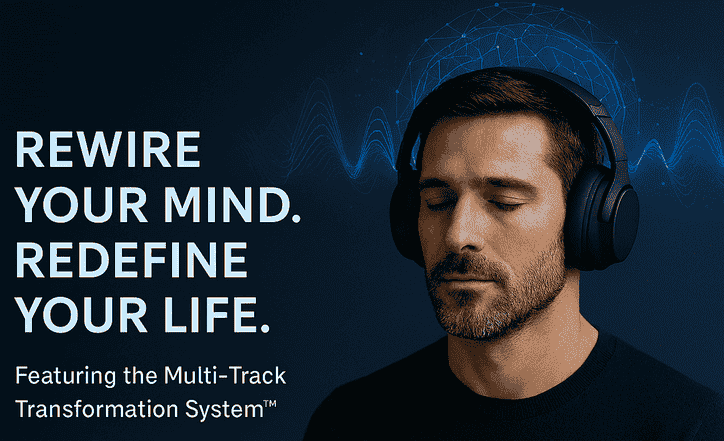



Most people understand the subconscious mind as the part of the mind they are not currently aware of - a kind of mental background, a repository of forgotten memories, the place where dreams come from. This understanding is not wrong exactly, but it dramatically understates what the subconscious is actually doing at every waking moment and why the gap between what people consciously intend and what they actually experience in their lives is almost entirely explained by the difference between conscious desire and subconscious programming.
Neuroscience has been progressively validating what hypnotherapists, psychologists, and contemplative traditions have understood for well over a century: that the conscious mind - the part of you that is reading these words, forming opinions, making plans, and believing it is in charge - is responsible for perhaps five percent of your behaviour at most. The other ninety-five percent is generated by subconscious programs operating below awareness, drawing on a vast architecture of stored beliefs, emotional associations, pattern-matched experiences, and identity conclusions that were mostly installed before you were old enough to evaluate or consent to them.
Conscious vs Subconscious: The Real Division of Labour
🔵 The Conscious Mind
- Handles approximately 5% of behaviour
- Processes ~40-50 bits of information per second
- Sequential - one thought at a time
- Short-term working memory: 7 items (±2)
- Generates intentions, plans, and decisions
- Requires effort and depletes with use
- Easily overridden by subconscious under stress
- Active during focused, deliberate thought
- The part that reads self-help books
- Believes it is in charge
🔴 The Subconscious Mind
- Handles approximately 95% of behaviour
- Processes ~11 million bits per second
- Parallel - manages thousands of processes simultaneously
- Effectively unlimited storage capacity
- Executes habits, emotional responses, and identity
- Effortless - runs automatically without depletion
- Overrides conscious intention when the two conflict
- Active continuously, including during sleep
- The part that determines your outcomes
- Actually in charge
What the Subconscious Mind Actually Contains
Beliefs About Self and World
Every conclusion the brain has drawn about who you are, what you deserve, what is possible, what is safe, and how the world works - stored as operating assumptions that filter incoming experience and direct behaviour without any conscious evaluation. These beliefs were installed primarily through experience and emotional impact, not rational deliberation, which is why rational argument rarely changes them.
Habits and Automated Behaviours
Every repeated behaviour sequence that the basal ganglia has converted from effortful conscious action into automatic routine - from how you brush your teeth to how you respond to criticism, from the route you drive to work to the emotional pattern you replay in intimate relationships. Habits are not stored in conscious memory. They are encoded in the subconscious as chunked neural sequences that fire without deliberate initiation.
Emotional Memory and Associations
The amygdala-driven emotional significance attached to every memory, object, person, and situation that has been encountered with sufficient intensity - the invisible emotional colouring of experience that determines which situations feel safe and which feel threatening, which people feel trustworthy and which feel dangerous, long after the rational basis for those feelings has been forgotten or was never consciously registered at all.
Identity and Self-Concept
The consolidated sense of who you are - the default self-image that the Default Mode Network constructs and maintains, that determines what feels natural and what feels like acting, what is consistent with "someone like me" and what is not. Identity is not a conscious belief about oneself. It is a subconscious operating parameter that shapes behaviour as automatically as a thermostat shapes temperature - and with comparable resistance to override from outside the system.
Threat and Safety Maps
The accumulated neurological maps of what is safe and what is dangerous - built from every significant experience of threat, pain, rejection, humiliation, or loss that the nervous system has encoded as survival-relevant information. These maps operate continuously below awareness, generating the automatic avoidance, vigilance, and defensive responses that appear to the conscious mind as irrational anxiety, inexplicable resistance, or puzzling self-limitation.
Physiological Regulation
The entire autonomic nervous system - heart rate, breathing, digestion, immune function, hormonal regulation, sleep architecture, and hundreds of other biological processes - runs through the subconscious. This is why psychological state has such direct and measurable effects on physical health, and why the mind-body connection is not a metaphor but a literal biological pathway that runs primarily through subconscious processing.
How the Subconscious Was Programmed - and Why Most of It Happened Before You Could Consent
🧠 The critical period of subconscious installation: Between birth and approximately age seven, the human brain spends most of its time in theta brainwave states - the same deeply receptive state produced by hypnotic induction. In this state, the critical faculty that allows an adult to evaluate incoming information and decide whether to accept or reject it is not yet developed. Everything experienced with sufficient emotional intensity - every interaction, every observation of how adults around you behaved, every lesson delivered by the environment about what love looks like, what safety requires, what you deserve, and what is possible for someone like you - is installed directly into the subconscious without filtering or evaluation. The result is that most adults are running on programming they received before they were old enough to understand it, let alone choose it.
This is not a counsel of hopelessness - it is, in fact, the most important piece of information available to anyone trying to understand why they behave in ways that contradict their conscious intentions, why they repeat patterns they have analysed and understood and resolved to change, and why their outcomes consistently track their subconscious programs rather than their conscious desires. Because if the subconscious was programmed through a process of emotionally-impactful experience during periods of high receptivity, then it can be reprogrammed through a process that replicates those conditions - which is precisely what therapeutic hypnosis does.
Why the Subconscious Resists Change - and What That Resistance Actually Is
- The subconscious is optimized for consistency, not improvement. Its primary function is to maintain the patterns and predict the outcomes that the existing programming has mapped - not to grow, not to achieve goals, not to become a better version of the person. When a conscious goal conflicts with a subconscious program, the subconscious wins not because it is more powerful but because it is running at 95% of the bandwidth and the conscious mind is running at 5%.
- Self-sabotage is the subconscious protecting its model. When a person moves toward outcomes that conflict with their subconscious identity or threat maps - earning more money than their money blueprint allows, sustaining a relationship more loving than their attachment programming considers normal, achieving a level of success that their impostor beliefs cannot reconcile - the subconscious generates the thoughts, emotions, and behavioural impulses that return the situation to familiar territory. This is not self-destruction. It is the program running exactly as written.
- Homeostasis is neurological, not motivational. The resistance to change that most people interpret as weakness, laziness, or lack of commitment is the nervous system's deeply wired preference for the known over the unknown - even when the known is uncomfortable and the unknown is objectively better. This homeostatic pull operates below conscious awareness and does not respond to willpower, because willpower is a conscious faculty and the homeostasis is subconscious.
- Understanding a program does not delete it. Insight - the conscious understanding of why a pattern exists, where it came from, and what it is doing - is valuable and genuinely useful. But insight alone does not change the subconscious program any more than understanding why a thermostat is set too low changes the temperature it produces. The program must be accessed and updated at the level where it lives, which is below the threshold of conscious deliberation.
Accessing and Updating the Subconscious: What Actually Works
Enter the Receptive State - Replicate the Installation Conditions
The theta brainwave state in which childhood subconscious programming was installed is the same state produced by hypnotic induction - a state of deeply relaxed, focused awareness in which the critical faculty quietens and the subconscious becomes directly accessible. This is not a mystical or unusual state. It is a normal neurological condition that every person moves through naturally twice daily at the boundary between wakefulness and sleep. Hypnosis deliberately induces and sustains this state long enough to do precise therapeutic work within it.
Identify the Specific Programs Driving the Unwanted Pattern
Most unwanted patterns in adult life - the recurring relationship dynamic, the persistent financial ceiling, the anxiety that appears in specific contexts, the self-sabotage that dismantles progress - are produced by identifiable subconscious programs: specific beliefs, emotional associations, identity conclusions, or threat maps that were installed at specific points and that have been running their consequences ever since. Identifying the precise program - not just the pattern it produces - allows the therapeutic work to target the source rather than its expressions.
Reprocess the Origin Experiences
The formative experiences that installed the subconscious program - the emotionally significant events that the subconscious drew its conclusions from - can be revisited in the hypnotic state and reprocessed. The emotional charge that gave the experience its programming power can be released, the identity conclusion the subconscious drew from it can be updated, and the neurological footprint of the experience can be changed from a continuing instruction to a completed past event. This is not the suppression of memory. It is the resolution of an ongoing neurological process that the memory has been driving.
Install the Updated Program Directly
In the theta state of hypnosis, new beliefs, new emotional associations, new identity conclusions, and new behavioural patterns can be installed with the same direct subconscious access that made childhood programming so durable. The updated program - the belief that supports the goal, the identity consistent with the desired outcome, the emotional association that makes the new behaviour feel natural rather than effortful - bypasses the critical faculty that would ordinarily evaluate and resist it, and is encoded at the subconscious level where behaviour is actually generated.
Consolidate Through Repetition and Real-World Confirmation
A single hypnotic session can produce significant and sometimes dramatic subconscious updates - but the most durable reprogramming results from repeated sessions that reinforce the new program and progressively replace the old one, combined with real-world experiences that provide the subconscious with genuine confirming evidence for the updated belief. The subconscious is ultimately an evidence-based system - it updates most completely when new information is delivered through both direct installation and lived experience that validates what the installation has suggested.
🎉 Free Download: Experience Direct Subconscious Access
The 12 Minute Relaxation MP3 guides you into the theta brainwave state where the subconscious becomes directly accessible - the neurological starting point for every genuine change process. This is not relaxation as a pleasant interlude. It is subconscious access as a practical tool.
⬇ Download Free MP3Also free: Belief & Visualization Guide

🌟 Ready to Update the Programs That Are Actually Running Your Life?
Every program in the MindTraining.net library works through the same mechanism - direct subconscious access in the theta state, targeting the specific beliefs, emotional associations, and identity programs that are driving the patterns you want to change. The full self-help program library covers the most common subconscious programs across confidence, stress, sleep, habits, money, health, and relationships.
🎯 For programs precisely targeted to your individual subconscious patterns: customized recordings deliver the most exact subconscious updates available outside of live clinical work.
📚 Related Articles

What Is Hypnosis?
How hypnosis creates direct subconscious access - the mechanism behind why it works where other approaches don't.

Conscious vs Subconscious
A deeper exploration of how the two systems interact - and what happens when they conflict.
The Psychology of Change
Why understanding the subconscious is the starting point for any genuine and lasting change process.

Neuroplasticity Explained
The biological mechanism that makes subconscious reprogramming physically possible - and measurable.