



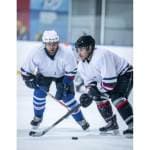
Every great ice hockey player is described the same way. Instinctive. Smart. Always in the right place at the right time. It looks effortless from the outside, as if they simply know what is about to happen before it unfolds.
You already know this is not luck. The real question is why some players develop these instincts while others, equally trained and experienced, never quite do.
Great hockey instincts are not conscious decisions. They are trained subconscious responses.
Here is the thing. Instinct is not a mystery trait you either have or do not have. It is a skill rooted in how the subconscious processes information under speed and pressure.
Most people believe instincts come from repetition alone. More drills. More games. More exposure. This is partly true, but incomplete.
Not repetition by itself, but repetition processed through a nervous system that feels safe enough to absorb patterns. This is not X but Y. Not experience, but integration.
You already know players who practice constantly yet still react late. The real issue is not knowledge. It is bandwidth.
The subconscious mind is a prediction engine. It constantly scans the environment and compares what it sees to stored patterns. When enough familiarity exists, action happens before conscious thought arrives.
This is why instinct feels immediate. There is no inner dialogue. No debate. Just movement.
Instinct is recognition happening faster than thought.
Under threat, this system shuts down. The brain switches from prediction to protection. When this happens, instincts vanish, even though the information is still there.
This explains why pressure kills instinct for some players but sharpens it for others. Pressure amplifies whatever state the subconscious is already in.
If pressure feels dangerous, awareness narrows. If pressure feels manageable, awareness expands.
Instinct thrives in openness, not tension.
You may notice that your instincts are strongest when you feel relaxed yet engaged. That is not coincidence. That is neurological alignment.
The subconscious skill behind every great hockey instinct is learned safety under speed. Players who develop instinctive play have trained their nervous system to remain receptive in chaotic environments.
They do not suppress emotion. They metabolize it. Excitement, urgency, and intensity pass through without hijacking perception.
This is why instinctive players often say the game feels slower to them. Their subconscious is not clogged by threat processing.
Instinct can be trained deliberately. Not by chasing intuition, but by removing interference.
Subconscious methods, including hypnosis, allow players to rehearse high-speed scenarios while maintaining regulation. Over time, the nervous system stops flagging speed as danger.
When safety rises, instinct returns.
This process benefits adults as much as developing players. Instinct is not lost with age. It is buried under caution.
Every great ice hockey instinct is the result of a subconscious system that has learned how to stay open under pressure.
This is the shift. Not chasing instinct, but cultivating the conditions that allow it to emerge. When the subconscious feels safe, the game reveals itself automatically.
Not because you are trying harder, but because you are interfering less.

🔒 Related Solutions
All our programs use theta brainwave frequencies and binaural beats to guide your mind into the deeply receptive state where subconscious change actually occurs - the same state reached by experienced meditators, and the level at which hypnotic suggestion produces its most lasting results. Simply listen with headphones, relax, and let the recordings do the work.
🧠 Most Specific Program
The Ice Hockey Visualization / Hypnosis Program works directly at the deepest subconscious level to bring about improvements in all areas of performance.
The Freedom from Anxiety Program dissolves stress, worry and overwhelm at the deepest subconscious level with a powerful 4-track hypnosis system.
The Deep Focus & Concentration Program is a 5-track subconscious system designed to build deep work states, concentration, and sustained mental clarity for high-performance focus.
🎯 Need Something More Personalized?
While our pre-made programs are effective for most people, if your situation feels more complex, deeply embedded, or highly personal than what a general program can address, a tailored approach may offer a deeper level of support. Our Custom Hypnosis Recordings are personally designed for you, giving you the flexibility to target your specific goals and challenges through carefully engineered layered audio tracks, theta brainwave entrainment, binaural beats, and NeuroFrequency Programming™ - to guide the mind into deeply relaxed, highly receptive states where positive subconscious changes occur more naturally.
🎯 New to Relaxation / Self-Hypnosis?
Our complementary 12 Minute Relaxation provides a guided recording perfect for starting out, or for anyone wanting quick light relaxation. More free downloads also on this page, for sleep etc.

🎧 Recommended Programs for This Topic

Ice Hockey
Sharpen focus, build game-day confidence, and perform under pressure with proven mental training and visualization techniques for peak ice hockey performance.

Deep Focus & Concentration Program
5-track subconscious system designed to build deep work states, concentration, and sustained mental clarity for high-performance focus.

Custom Sports Hypnosis Recordings
Recordings built specifically around your goals, training and challenges - the most targeted way to use hypnosis for lasting change.
Shop
See our entire selection of powerful hypnotic sports programs