


What Hypnosis for Anxiety Actually Looks Like in Real Life
Research from Stanford University led by Dr. David Spiegel has shown that hypnosis creates measurable changes in brain networks involved in attention, self-awareness, and emotional processing, which is one of the reasons it has become increasingly studied as a supportive approach for anxiety and stress-related conditions in clinical settings.
But despite the research, most people still have a very unclear picture of what actually happens in a hypnosis session. Some imagine losing control, being “put under,” or doing things unconsciously, while others expect something dramatic or theatrical. The reality is much more grounded, calm, and surprisingly practical.
Here is the thing. A hypnosis session for anxiety is not about control. It is about attention, focus, and retraining the subconscious patterns that sit underneath anxious reactions, often without the person fully realising those patterns are running in the background.
From the outside, a session can look almost too simple. You sit in a comfortable position. You talk about what you are experiencing. You are guided into a focused, inward state where attention becomes more absorbed. And then you begin working with suggestions, imagery, and internal re-patterning that target how your nervous system responds to stress, fear, and uncertainty.
There is no loss of awareness. You hear everything. You remain present. You are simply less distracted by external noise and more engaged with internal experience, which is exactly why the subconscious becomes more accessible in that state.
What Happens Step by Step in a Typical Session
A well-structured hypnosis session for anxiety usually begins with a conversation. This is not just casual talk. It is where the practitioner identifies how anxiety is showing up for you specifically, because anxiety is never identical from one person to another.
For some people it is racing thoughts. For others it is panic sensations in the body. For others it is social fear, anticipatory worry, or constant self-monitoring. The subconscious pattern always has its own structure.
Once that is understood, the session shifts into a more focused state. You are guided into a relaxed but alert awareness. This is often described as a calm inward focus, where external distractions fade slightly and attention becomes more internally oriented.
At this stage, the work is not about “forcing relaxation.” It is about shifting how your subconscious interprets internal signals like tension, heartbeat changes, or uncertainty so they no longer automatically trigger a fear response.
You might be guided through imagery. You might be asked to notice physical sensations in a different way. You might work with memories or anticipated situations, but from a calmer internal state where the emotional response can be reshaped rather than replayed automatically.
And then the session gradually integrates everything back into normal awareness so you leave feeling clear, grounded, and usually more settled than when you arrived.
Hypnosis is not about losing control. It is about changing the internal patterns that quietly control your reactions in the first place.
Why Anxiety Responds Well to Hypnosis
Anxiety is not just a thought pattern. It is a learned survival response stored in the subconscious mind and reinforced through repetition over time. That is why it often feels automatic and why it can continue even when you logically understand you are safe.
Dr. Joseph LeDoux’s research on fear processing shows that the brain’s threat detection system can activate before conscious reasoning fully engages, which helps explain why anxiety often feels immediate and difficult to interrupt through logic alone.
Hypnosis becomes relevant here because it does not rely only on conscious reasoning. It works with attention, imagery, emotional association, and subconscious learning pathways that are more directly involved in how fear responses are built and maintained.
Instead of arguing with anxious thoughts, hypnosis allows the emotional meaning behind those thoughts and sensations to be updated at a deeper level.
So rather than “I need to stop thinking this way,” the shift becomes “this sensation does not mean danger anymore,” which is a very different level of change.
This is also why many people notice that hypnosis feels different from other approaches they have tried. It is not primarily about effort, discipline, or willpower. It is about changing the underlying association between internal sensations and perceived threat.
What It Actually Feels Like During Hypnosis
Most people expect hypnosis to feel strange or unfamiliar, but in reality it often feels like a very natural shift in attention, similar to being absorbed in a book, a film, or a moment of deep reflection where external noise fades slightly and internal focus becomes more dominant.
You are still aware of everything happening. You can move if you want to. You can speak if needed. You are not unconscious or disconnected. What changes is how deeply your attention is engaged internally rather than externally.
For anxiety specifically, this shift matters because anxious states are usually externally scanning states. The mind is constantly checking for danger, evaluating possibilities, monitoring sensations, and predicting outcomes. Hypnosis gently interrupts that pattern by changing where attention naturally settles.
As the session continues, the subconscious becomes more open to new associations. A racing heart can be reinterpreted. A tense body can be experienced without fear. Uncertainty can begin to feel less threatening.
This is not forced calm. It is recalibration of meaning.
In-Person Hypnosis vs Guided Recordings at Home
There are two main ways people experience hypnosis for anxiety. One is in-person sessions with a practitioner. The other is structured guided recordings used at home. Both work through the same core mechanism, but the conditions around them create very different psychological outcomes.
In-person sessions give you real-time interaction. A practitioner can adjust language based on how you respond, guide you through emotional shifts as they happen, and support you through deeper material as it comes up. For people who feel highly reactive or unsure at the beginning, that external guidance can feel stabilising because you are not holding the process alone.
But here is the part most people do not think about. Anxiety does not only respond to technique. It responds to environment, repetition, and perceived safety.
This is where guided recordings often become unexpectedly powerful.
When you use a well-designed hypnosis recording at home, your nervous system is already in familiar territory. There is no appointment pressure. No sense of being observed. No need to explain yourself. No travel. No transition into a clinical or formal setting. That matters more than people realise because anxiety is highly sensitive to context.
So instead of trying to calm anxiety inside a “performance environment,” you are training calm inside your real life environment.
And that is where repetition changes everything.
With recordings, you are not limited to one session per week or occasional appointments. You can repeat the process daily, or even during moments when your nervous system is slightly activated, which is exactly when subconscious learning becomes most powerful.
Over time, the brain stops treating calm as something you only experience in structured settings and begins associating it with your normal daily environment. That shift is subtle, but it is what creates long-term change.
Real change happens when calm is trained inside your everyday environment, not just experienced in isolated sessions.
Why Home-Based Hypnosis Works So Well for Anxiety Patterns
Anxiety is not random. It is context-sensitive. That means it shifts depending on where you are, what you are doing, and how safe your nervous system believes you are in that moment.
This is exactly why home-based hypnosis recordings can be so effective. They remove unnecessary layers of activation before the process even begins.
You are not preparing for an appointment. You are not leaving your environment. You are not stepping into a space your subconscious may associate with evaluation or expectation. You are simply working within your own space, where your nervous system already has established patterns of familiarity.
That familiarity is not a small detail. It is the foundation that allows deeper subconscious work to happen more smoothly.
When the nervous system feels safe, it stops scanning as aggressively. When it stops scanning, it becomes more receptive. When it becomes more receptive, new emotional patterns can actually land and integrate instead of being resisted or overridden by fear responses.
Now combine that with repetition and you get something powerful.
Every time you listen, you are reinforcing a slightly different internal response to the same sensations that previously triggered anxiety. Over time, your subconscious begins to update its predictions. What once felt like a threat starts to feel neutral. What once felt overwhelming starts to feel manageable. What once triggered panic starts to pass without escalation.
This is also where many people underestimate recordings. They assume change must come from intensity or a single breakthrough moment. But anxiety does not usually dissolve through intensity. It shifts through repetition, safety, and familiarity.
So instead of waiting for rare moments of relief, you are building a system where calm becomes increasingly normal in your everyday environment.
The nervous system does not change through pressure. It changes through repeated experiences of safety in the environments where anxiety normally appears.
What Realistic Results Look Like Over Time
Hypnosis for anxiety is not usually a single dramatic switch. For most people, it is a gradual recalibration of how the nervous system responds to internal sensations and external uncertainty.
At first, changes may feel subtle. A little more space between thoughts. Slightly less intensity in physical reactions. Faster recovery after stressful moments. Reduced anticipation of worst-case scenarios.
Over time, those shifts tend to compound. The subconscious stops reacting as quickly. The body settles more easily. The mind becomes less reactive to uncertainty. Internal monitoring reduces without conscious effort.
This is not about becoming emotionless or detached. It is about no longer being controlled by automatic fear responses that once felt unavoidable.
Milton Erickson once described therapeutic change as something that often happens indirectly, beneath conscious awareness, until one day the person notices they are responding differently without needing to force it.
That is often what effective hypnosis for anxiety looks like in practice.
At MindTraining.net, this process is supported through structured subconscious work and NeuroFrequency Programming™ designed to reinforce calmer baseline responses, reduce internal threat interpretation, and build a more stable internal sense of safety that continues developing beyond any single session.

🔒 Related Products
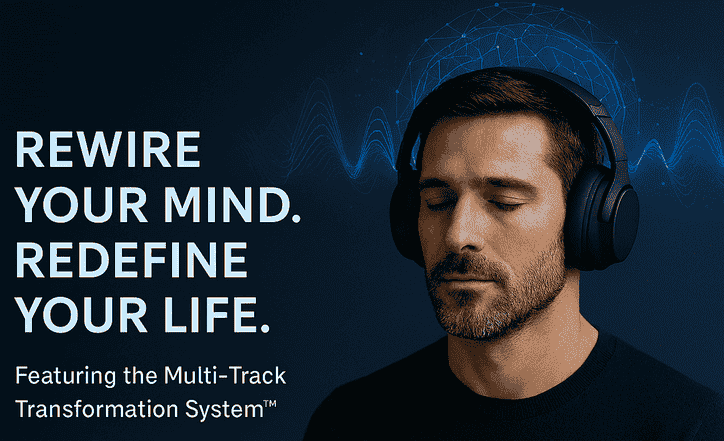
All our programs use theta brainwave frequencies and binaural beats to guide your mind into the deeply receptive state where subconscious change actually occurs - the same state reached by experienced meditators, and the level at which hypnotic suggestion produces its most lasting results. Simply listen with headphones, relax, and let the recordings do the work.
🧠 Most Specific Product
Our Freedom from Anxiety Program helps to dissolve stress, worry and overwhelm at the deepest subconscious level with a powerful 4-track hypnosis system.Our Deep Focus & Concentration Program is a 5-track subconscious training system designed to build deep mental work states, concentration, and sustained focus and mental clarity for high-performance and productivity, regardless of you need to focus upon.
Our Social Anxiety Program helps to overcome the crippling symptoms of social anxiety and build natural self-assurance and self-acceptance.
🧘 Another Powerful Program
The Deep Meditation Program allows you to access the deepest levels of relaxation to allow inner peace and mental clarity to flow through every area of your life.
🎯 Need Something More Personalized?
While our pre-made programs are effective for most people, sometimes you need something tailored specifically to your unique situation. Our Custom Hypnosis Recordings are personally designed for you, giving you the flexibility to target your specific goals and challenges through carefully engineered layered audio tracks, theta brainwave entrainment, binaural beats, and NeuroFrequency Programming™ - to guide the mind into deeply relaxed, highly receptive states where positive subconscious changes occur more naturally.
🎯 New to Relaxation / Self-Hypnosis?
Our complementary 12 Minute Relaxation provides a guided recording perfect for starting out, or for anyone wanting quick light relaxation. More free downloads also on this page, for sleep etc.

🎧 Recommended Products for This Topic

Freedom from Anxiety Program
Dissolve stress, worry and overwhelm at the source, at the subconscious level, with this 4 track program.

Social Anxiety
Overcome the crippling symptoms of social anxiety and build natural self-assurance and self-acceptance.

Deep Meditation Program
Access the deepest levels of relaxation to bring inner peace into every area of your life.
Online Shop
See our entire selection of powerful hypnotic self help products