




You’ve seen it a thousand times. A player hits a blistering forehand winner, screams "Come on!", and then proceeds to dump three straight unforced errors into the bottom of the net. Or conversely, the player who looks like they’re out for a casual Sunday stroll while they methodically dismantle a frustrated opponent.
In tennis, we obsess over the physics: the topspin RPMs, the serve speed, the footwork patterns. But here is the reality: a standard 2-hour tennis match only contains about 20 to 30 minutes of actual ball-in-play time. The rest? It’s just you, your thoughts, and the walk to the towel rack. That 80% of the match is where the "Mental Battle" is actually won or lost.
The "Dark Room" of the Mind
When the point ends, your brain enters what sports psychologists call the transition phase. If you’ve just lost a point on a "bad" call or a shanked overhead, your brain wants to stay in the past. It wants to litigate the mistake. If you’re up 40-0, your brain wants to jump to the future - to the handshake and the trophy. Both are traps.
Winning the mental battle isn't about not having emotions; it's about having a system to process them so they don't leak into the next point.
The Four-Stage Reset Routine
The pros don't just wander around. They use a specific 16-to-25 second ritual. Think of this as a "Save Game" button for your focus.
Stage 1: The Positive Physical Reaction (1-5 Seconds)
Immediately after the point, regardless of the outcome, do something intentional with your body. If you won the point, a subtle fist pump is fine. If you lost it, immediately put the racket in your non-dominant hand. This "neutralizes" the weapon. Walk with your shoulders back and head up. You are tricking your nervous system into believing you are still in control, even if you just missed a sitter.
Stage 2: The Relaxation Phase (5-10 Seconds)
This is the "towel-off" moment. Even if you don't have sweat on your face, go to the towel. It’s a physical boundary between the point that just happened and the one coming up. Take one "Cleansing Breath" - deep into the belly, exhaling slowly through the mouth. This triggers the parasympathetic nervous system, lowering the cortisol spike that comes with a high-pressure point.
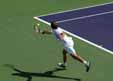
Stage 3: The Micro-Tactical Plan (10-15 Seconds)
Now, we turn the brain back on, but only for strategy, not emotion. Ask yourself one simple question: "Where am I sending the first ball?" Don't think about the score or the stakes. Just think: "Slice serve to the T" or "Heavy cross-court return."
Stage 4: The Ritual Trigger (The Final Seconds)
Before the serve or return, have a "trigger." For Nadal, it’s the hair and shirt tugs. For Djokovic, it’s the (very long) ball bounce. For you, it might be adjusting your strings or bouncing the ball exactly three times. This tells your brain: "The reset is complete. We are now in performance mode."
Managing the "Scoreboard Pressure"
We’ve all felt the "tightness" at 30-40 or in a tiebreak. The reason we choke isn't because we forget how to hit a forehand; it's because we focus on the consequences of the shot rather than the execution of the shot.
To win the mental battle here, you must use Process Goals. Instead of saying "I have to win this game," tell yourself "I am going to move my feet until the ball stops." You can control your feet; you can't always control the scoreboard. By focusing on the controllable, the anxiety naturally dissipates.
The Power of the "Internal Caddy"
Imagine if a golf caddy followed a player around saying, "You're terrible, why did you hit that into the water? You're going to lose the tournament." That caddy would be fired by the third hole. Yet, that is how most tennis players talk to themselves.
Between points, your internal monologue should be that of a supportive, objective coach. Instead of "You idiot, move your feet!", try "Let's get the feet moving earlier on this next one." It’s subtle, but it moves the brain from Self-Criticism to Problem-Solving.
Conclusion: The 80% Rule
If you want to jump a level in your NTRP or UTR rating, don't just buy a new racket or spend three hours on a ball machine. Spend your next practice match obsessing over what you do between the points. If you can win the 80% of the time the ball isn't moving, the 20% where it is will become a whole lot easier.
Next time you hit the court: Breathe, Reset, Plan, Repeat.
🎉 Free Download: Begin Building Your Tennis Mental Game Today
The 12 Minute Relaxation MP3 trains the parasympathetic baseline that makes the between-point reset genuinely available - and creates the deep subconscious access state from which every mental game pattern can be addressed at its source rather than managed at the surface. Use it daily to build the neurological foundation that makes competitive composure consistent rather than occasional.
⬇ Download Free MP3Also free: Belief & Visualization Guide

🎾 Ready to Win the Matches Your Game Deserves?
🧠 Our Mind Training for Tennis Program contains a complete mental training program and also a powerful hypnotic visualization technique to pre-program your mind for success.
💡 For patterns specific to your game, your opponents, and your competitive environment: personalized tennis recordings deliver the most precisely targeted intervention available.
📚 Related Articles

Sports Performance Anxiety
The neuroscience of choking - what happens neurologically when players tighten at critical moments and how to resolve it.

The Mental Game of Golf
The same mental game principles applied to the sport where the mind has the most time to interfere.

Intimidation in Sport
When the opponent's reputation or presence is changing how you play - and how to compete free from it.