



Why Confidence Is Often Misunderstood in Attraction
Research in social perception shows that people respond more to underlying emotional signals than spoken words, with work linked to Albert Bandura and affective neuroscience suggesting that internal state consistently shapes how behavior is interpreted. This explains why two men can say almost identical things, yet one feels natural and attractive while the other feels forced, despite having similar surface-level confidence.
Here is the thing, most people think confidence is about how you act, what you say, or how you present yourself externally, but that is only the visible layer. What actually drives how you come across in interaction is the internal state underneath that behavior, which determines whether your actions feel genuine, relaxed, and stable or tense, controlled, and uncertain.
People do not respond to confidence as a performance. They respond to the state behind it.
You already know how to act confident. The real issue is whether that confidence is being held together externally or generated internally in a way that does not require effort.
The Difference Between Acting Confident and Being Stable
When confidence is created through effort, it often involves consciously managing how you appear, which means your attention is partially focused on controlling your behavior. This creates a subtle tension in interaction because part of your system is monitoring how you are coming across instead of being fully present in the moment.
Daniel Kahneman’s work shows that when attention is divided between action and evaluation, performance becomes less fluid, which is why this type of confidence can feel unstable and difficult to maintain over time. Even if it works initially, it requires constant effort to sustain because it is being constructed rather than naturally expressed.
In contrast, when confidence comes from internal stability, behavior does not need to be managed in the same way. The system is not trying to produce a result. It is simply responding, which allows communication to remain relaxed and consistent without the need for control.
What Internal State Actually Signals
The internal state you bring into an interaction influences everything about how you are perceived, including tone, timing, body movement, eye contact, and the way your words land. These signals are processed automatically by the other person, often without conscious awareness, which means the underlying state becomes more important than the specific content of what you say.
John Bargh’s research on automatic perception shows that people rapidly pick up on subtle behavioral cues linked to internal state, which is why interactions feel different even when the observable behavior appears similar on the surface. The subconscious picks up what the conscious mind may not explicitly notice.
This is why someone can appear confident externally but still feel slightly off in interaction, because the internal state is not fully aligned with the behavior being displayed.
Attraction is influenced less by what you do and more by what your behavior is coming from.
The difference might be subtle, but it is enough to change how comfortable and connected the interaction feels.
Why Outcome Dependence Disrupts Attraction
When your internal state depends on how the interaction goes, your system begins to treat the situation as high-stakes, which changes how you respond in real time. Instead of staying grounded, part of your attention shifts toward evaluating whether you are doing “well,” which introduces hesitation and disrupts natural flow.
Research Snapshot
• Internal confidence stabilizes behavior (Bandura)
• Self-monitoring disrupts natural performance (Kahneman)
• Subtle cues reveal internal state (Bargh)
This does not mean you stop functioning socially, but it creates a slight delay in response, a tightening in delivery, and a reduction in spontaneity that becomes noticeable over the course of the interaction. These changes often happen without awareness, which is why they can be difficult to correct through conscious effort.
The system is not failing. It is protecting against perceived risk.
Why Women Respond to Stability More Than Display
Attraction is not built on how impressive behavior looks on the surface, but on how stable and predictable the internal state feels during interaction. A stable internal state creates a sense of ease because there is no hidden tension or need being communicated beneath the behavior.
This is why overly controlled or performative confidence can feel less natural, because it carries a sense that something is being managed or attempted rather than simply expressed. When that layer disappears, the interaction feels lighter, which allows connection to build more easily.
This is not about doing less. It is about removing interference so what you naturally are can come through more clearly.
What This Looks Like in Real Interactions
In practice, the difference shows up in timing, presence, and responsiveness. When the internal state is stable, responses come naturally without delay, eye contact holds without being forced, and conversation flows without needing to be controlled or directed.
In Practice
In years of working with clients around attraction and confidence, I have consistently observed that the turning point is not when men learn better communication techniques, but when the internal need for a specific outcome reduces. Once that need drops, behavior becomes more natural, and interactions immediately feel different.
This shift often feels surprising because nothing new is added, but a large amount of internal pressure is removed. The result is a version of behavior that feels effortless rather than intentional.
That is what people respond to most strongly, because it feels real.
How to Develop the Internal State That Drives Attraction
Developing this internal state requires moving away from outcome-based thinking and toward stability that does not depend on how the interaction unfolds. This is not achieved by forcing yourself to act differently, but by changing the underlying interpretation of the situation so it no longer feels like something that needs to be managed.
Here is the thing, once the system stops treating the interaction as something that determines value, tension drops naturally, and behavior returns to its normal state without needing to be controlled. The same communication ability that already exists begins to show up consistently, because it is no longer being filtered through evaluation.
“Beliefs shape behavior,” as Bandura explains, which means when the belief behind the interaction changes, the behavior adapts automatically without effort.
This is where NeuroFrequency Programming™ becomes transformative, because it works at the subconscious level where these internal patterns originate, allowing the system to detach from outcome-driven pressure so attraction becomes a natural result of internal stability rather than something that has to be created externally.
Why This Shift Feels Bigger Than a Technique
One of the reasons this concept feels different from typical advice is because it does not operate at the level of individual behavior changes, but at the level of the system that produces those behaviors in the first place. When that system changes, multiple aspects of interaction improve simultaneously without needing to be trained separately.
You do not need to think about posture, tone, or wording individually, because those elements naturally align when the internal state behind them is stable. The system simplifies itself, which is why interactions begin to feel easier rather than more complex.
This is also why the change feels like a shift rather than an improvement, because it alters how situations are experienced rather than just how they are handled. What previously felt like something to navigate becomes something you move through naturally without resistance.
Over time, this creates consistency, which reinforces itself through repeated experience, allowing the new state to become the default rather than something that has to be consciously maintained. This is where confidence stops being something you try to create and becomes something that simply exists within your behavior.
Once this happens, attraction becomes less about doing things right and more about allowing the interaction to unfold without interference, which is ultimately what people respond to most strongly in any social environment.

🔒 Related Solutions
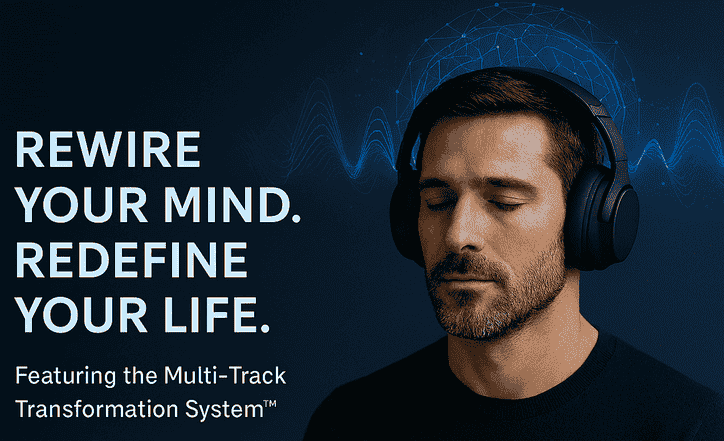
All our programs use theta brainwave frequencies and binaural beats to guide your mind into the deeply receptive state where subconscious change actually occurs - the same state reached by experienced meditators, and the level at which hypnotic suggestion produces its most lasting results. Simply listen with headphones, relax, and let the recordings do the work.
🧠 Most Specific Product(s)
The Overcoming Fear of Intimacy Program helps retrain emotional safety around closeness and connection.
If anxiety and overthinking interfere with your dating confidence, the Dating Anxiety Program calms the nervous system while building confidence.
The Attract Your Soul Mate Program focuses on subconscious barriers to authentic intimacy.
The Confidence / Self Esteem Hypnosis Program works directly at the deepest subconscious level to bring about positive changes from the inside, out - which can bring a wide and ongoing range of benefits to your everyday life.
🧘 Another Powerful Program
The Freedom from Anxiety Hypnosis Program dissolves stress, worry and overwhelm at the deepest subconscious level with a powerful 4-track hypnosis system.
🎯 Need Something More Personalized?
While our pre-made programs are effective for most people, if your situation feels more complex, deeply embedded, or highly personal than what a general program can address, a tailored approach may offer a deeper level of support. Our Custom Hypnosis Recordings are personally designed for you, giving you the flexibility to target your specific goals and challenges through carefully engineered layered audio tracks, theta brainwave entrainment, binaural beats, and NeuroFrequency Programming™ - to guide the mind into deeply relaxed, highly receptive states where positive subconscious changes occur more naturally.
🎯 New to Relaxation / Self-Hypnosis?
Our complementary 12 Minute Relaxation provides a guided recording perfect for starting out, or for anyone wanting quick light relaxation. More free downloads also on this page, for sleep etc.

🎧 Recommended Programs for This Topic

Confidence Talking to Women
Overcome approach anxiety, communicate naturally, and build genuine attraction with ease.

Attract Your Ideal Partner
Reprogram subconscious relationship patterns, release emotional blocks to intimacy, and develop the internal state that naturally draws in a healthy, aligned romantic connection.

Dating Anxiety
Release limiting relationship patterns, and attract a deep, meaningful connection.
>
Confidence & Self Esteem
Strengthen yourself from within to build confidence, self esteem, resilience, and a positive self image.

Freedom from Anxiety Program
Dissolve stress, worry and overwhelm at the source, at the subconscious level, with this 4 track program.

Social Anxiety
Overcome the crippling symptoms of social anxiety and build natural self-assurance and self-acceptance.

Custom Hypnosis Recordings
Tailored specifically to your goals, challenges, and personal circumstances — offering the most precise and individualized path to deep subconscious change.