



Your brain never stops generating electrical activity. From the moment you wake in the morning to the deepest point of sleep at night, billions of neurons are firing in coordinated rhythmic patterns, producing electrical oscillations that can be measured, categorized, and studied. These oscillations are what researchers call brainwaves, and the frequency at which your brain is oscillating at any given moment determines more about your mental and emotional state than almost any other single factor.
Understanding brainwave states is not an abstract neuroscience exercise. It is directly practical. Once you understand what each state does and when it naturally occurs, you understand why meditation works, why hypnosis works, why poor sleep destroys performance and mood, why some creative insights arrive in the shower rather than at your desk, and why the subconscious is most accessible at specific times of day and in specific mental conditions. The science makes sense of experiences that most people have had but never had a framework for.
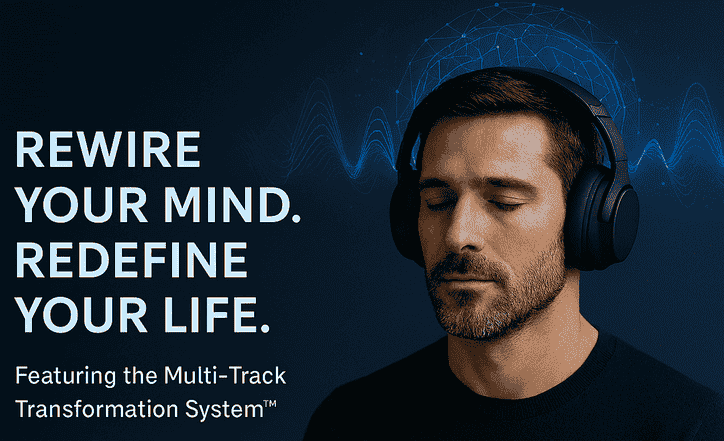
It also explains the technology behind Craig's NeuroFrequency Programming audio system, which is built specifically to guide the brain into the precise electrical states where learning, change, and recovery happen most efficiently. Understanding the brainwave science is the key to understanding why that approach works the way it does.
How Brainwaves Are Measured
Brainwaves are measured using electroencephalography, or EEG, which records the electrical activity of the brain through electrodes placed on the scalp. The resulting readout shows oscillating waves of electrical activity, the frequency of which is measured in cycles per second, or Hertz (Hz). Different frequency bands are associated with different mental states, and these associations have been established through decades of research across thousands of subjects.
It is important to understand that brainwaves are not binary on-off states. The brain is always producing a mixture of frequencies simultaneously, with one frequency typically dominant in any given moment. When we say someone is "in an alpha state," we mean alpha frequency waves are dominant in that moment, not that all other frequencies have disappeared. The brain's electrical landscape is rich, complex, and constantly shifting.
With that nuance in place, the five main brainwave categories and their associated mental states are among the most consistently documented and practically useful findings in all of neuroscience.
Beta Waves: The Everyday Waking State
Frequency range: 13 to 30 Hz (some classifications extend to 40 Hz for high beta)
Beta is the dominant brainwave state of normal alert waking consciousness. When you are thinking analytically, having a focused conversation, solving a problem, making decisions, or engaged in any kind of active cognitive processing, beta waves are dominant in your brain's electrical activity.
Beta is associated with the active, evaluating, reasoning conscious mind. It is the state of the prefrontal cortex doing its primary work of logical analysis, planning, and critical evaluation. This is the state in which you function most of your waking life, and it serves an essential purpose. It keeps you alert, responsive, and capable of the sophisticated conscious reasoning that is one of the most remarkable features of the human brain.
The problem with beta is what happens when it runs at too high an intensity for too long. High beta activity, particularly in the range above 20 Hz, is associated with active stress, anxiety, rumination, and the over-activated nervous system states that characterize chronic stress. The brain that cannot shift down from high beta into slower, more restful frequencies is a brain that cannot properly recover, cannot access its deepest creative resources, and cannot enter the states where genuine subconscious learning and change occur.
Most people in modern high-pressure environments spend far too much time in high beta, and far too little time in the slower frequencies below it. The result is the epidemic of stress, poor sleep, cognitive fatigue, and anxiety that defines so many people's experience of contemporary life.
Alpha Waves: The Bridge Between Conscious and Subconscious
Frequency range: 8 to 12 Hz
Alpha waves emerge when the active analytical effort of the beta state relaxes without tipping into sleep. Alpha is the brainwave state of calm, relaxed alertness. It is the state you move into when you close your eyes and breathe slowly, when you are absorbed in a gentle creative task, when you are taking a quiet walk in nature, or in the few minutes before sleep when the day's thinking begins to soften and drift.
Alpha is sometimes called the bridge between the conscious and subconscious minds, and this description is neurologically apt. As alpha becomes dominant, activity in the prefrontal cortex's critical filtering function begins to reduce. The evaluating, rejecting, analyzing gatekeeper relaxes its grip. The subconscious becomes more accessible, more receptive to new input, more open to suggestion and new association.
This is why many people report their best creative insights arriving during low-key activities rather than at their desk consciously trying to solve a problem. The shower, the walk, the half-awake morning state are all naturally alpha-rich environments. In those states, the conscious mind steps back enough for the subconscious, with its vastly greater processing capacity, to bring forward connections and insights that the beta brain's narrow focused beam would have missed.
Alpha is the entry point to the hypnotic state. A good hypnotic induction guides the brain from beta into alpha as its first stage, producing the characteristic sensation of relaxed, comfortable, alert-but-effortless awareness that most people describe after even a short hypnosis session. The therapeutic work of suggestion begins most powerfully in alpha and deepens further as the brain moves into the slower theta range.
Research consistently shows that regular time spent in alpha states produces measurable reductions in cortisol, improvements in immune function, enhanced creativity, and accelerated learning. The alpha state is not an idle state. It is one of the brain's most productive and restorative operating modes, and most people in modern life spend far too little deliberate time in it.

Theta Waves: The Gateway to the Subconscious
Frequency range: 4 to 8 Hz
Theta is the brainwave state that most directly underlies the power of hypnosis, deep meditation, and the extraordinary creative and emotional processing that happens in the hypnagogic borderland between waking and sleep. It is also the dominant state of the brain during REM dreaming sleep. Understanding theta is, in many ways, the single most important piece of brainwave knowledge for anyone interested in personal change, performance, or healing.
In the theta state, the conscious critical mind has receded substantially. Awareness remains present, but it is softer, more fluid, less analytical and defended than in either beta or alpha. Vivid imagery, emotionally rich experience, and a deep sense of inner spaciousness are characteristic of the theta state. It is the state in which memory is most deeply accessible, in which the emotional charge around past experiences can be most readily processed and released, and in which new beliefs, associations, and automatic response patterns can be most directly installed in the subconscious architecture.
This is why theta is sometimes called the gateway to the subconscious. It is not a metaphor. In theta, the prefrontal cortex's critical filtering function is substantially reduced, the subconscious becomes directly accessible, and the brain is in its most neuroplastic state, most capable of forming new neural associations and most open to having existing ones modified. Change that would take months or years of conscious effort to produce can occur far more rapidly when the right input is delivered in theta, because the gatekeeper is not standing in the way.
Children under the age of seven spend most of their waking hours in theta and alpha states, which is precisely why childhood is the period of most rapid belief installation and most profound subconscious programming. Adults rarely access theta naturally except in the moments before sleep, in deep meditation, or in the deep hypnotic state. This is why those contexts are so powerful for change.
Delta Waves: The Deep Restoration State
Frequency range: 0.5 to 4 Hz
Delta is the slowest of the main brainwave categories and is dominant during deep, dreamless sleep. In delta, conscious awareness is essentially absent. The brain is not processing information in any way that will be remembered or experienced subjectively. What it is doing is something far more important for long-term health and performance: repairing, restoring, and consolidating.
Deep delta sleep is when the brain clears metabolic waste products through the glymphatic system, including amyloid proteins associated with neurological disease. It is when growth hormone is most abundantly released, driving physical repair and recovery. It is when the immune system does much of its most intensive repair work. And it is when memories and learned material consolidated in the hippocampus during waking hours are transferred to longer-term storage in the cortex.
Chronic delta sleep deprivation, which affects a significant proportion of the population, produces cognitive impairment, emotional dysregulation, immune suppression, physical recovery deficits, and long-term neurological health risks that are increasingly well documented. The body and brain simply cannot function optimally without consistent deep delta sleep. It is not a luxury. It is a biological necessity.
Deep meditation and very deep hypnosis can produce delta wave activity in waking subjects, which is one reason why experienced meditators and people who regularly use deep hypnosis recordings often report extraordinary physical recovery, enhanced immune function, and an apparently reduced need for sleep. They are accessing delta's restorative benefits while maintaining some degree of awareness.
Gamma Waves: High-Speed Integration
Frequency range: 30 to 100 Hz
Gamma waves are the fastest of the commonly studied brainwave frequencies and are associated with states of heightened cognitive processing, cross-brain integration, and peak mental performance. Gamma is present during moments of insight, complex problem solving, and high-level perceptual binding, the process by which the brain assembles separate streams of sensory input into a unified, coherent experience.
Interestingly, gamma activity is also disproportionately high in experienced meditators during their practice, particularly in long-term practitioners of compassion meditation. This finding, which emerged from collaboration between neuroscientists and Tibetan Buddhist monks, suggests that advanced contemplative practice develops the brain's capacity for high-frequency integrative processing in ways that are structurally distinct from ordinary waking cognition.
For most practical purposes, gamma is less directly relevant to the applications of hypnosis and mind training than alpha and theta. But it is worth knowing about as context for understanding the full range of the brain's electrical states and the remarkable plasticity of this organ across different modes of operation.
🧠 Ready to Put Your Brain's Most Powerful States to Work?
Understanding brainwave states is one thing. Having a reliable, daily method for guiding your brain into exactly the right state for the change, recovery, or performance enhancement you are pursuing is another. My programs are built on precisely this science, using NeuroFrequency Programming audio technology to deliberately guide your brain into the alpha and theta states where subconscious change happens most efficiently and most durably.
🎯 Best Starting Point: Deep Meditation Program — specifically engineered to guide the brain through alpha and into theta consistently, creating the neurological conditions for the deepest and most lasting subconscious change available outside of clinical hypnotherapy.
✔ For Sleep and Delta Recovery: My Sleep Hypnosis Program — guides the brain from the high beta of a busy mind into the slower states that allow genuine delta sleep to occur, improving sleep quality, recovery, and morning cognitive performance.
✔ For Targeted Subconscious Change: My Custom Hypnosis Recordings — combine the alpha-theta brainwave guidance of NeuroFrequency Programming with suggestion crafted specifically around your goals.
🎉 Experience it free: Download my complimentary 12 Minute Relaxation — and feel your brain shift from beta into alpha within minutes of pressing play.

How NeuroFrequency Programming Uses Brainwave Science
The audio technology behind Craig's programs is built on a straightforward application of the brainwave research described in this article. The central challenge in using hypnosis or meditation for change is that most people, particularly those who are anxious, stressed, or highly analytical, have difficulty accessing and sustaining the alpha and theta states in which subconscious change most effectively occurs. The conscious beta mind keeps reasserting itself, pulling the person back out of the receptive state before the therapeutic work can fully land.
NeuroFrequency Programming audio is engineered to work around this challenge by using specific audio frequencies embedded in the recordings to entrain the brain toward the target brainwave state. The principle, called frequency following response, is well established in neuroscience: when the brain is presented with rhythmic auditory input at a specific frequency, it tends to synchronize its own electrical activity toward that frequency. By embedding carefully calibrated audio signals in the recordings, the technology essentially guides the brain toward alpha and theta in a way that doesn't require the listener to "try" to relax deeply. The audio does the entraining. The listener simply allows it.
This is why people who find conventional meditation difficult, or who struggle to enter deep hypnotic states through suggestion alone, often respond very effectively to the NeuroFrequency Programming approach. The neurological barrier to the state is addressed through the audio technology itself, allowing the therapeutic content of the recording to be received in the precisely optimal brainwave conditions.
Practical Implications: Using Brainwave Knowledge in Daily Life
You don't need to use specialized audio technology to work with brainwave states more deliberately. Understanding the basic landscape gives you immediately actionable knowledge about when your brain is in which state and how to work with that rather than against it.
The morning alpha window. In the first twenty to thirty minutes after waking, most people naturally move through a period of alpha dominance before the day's beta demands take over. This window is one of the most valuable and most underutilized resources available. The subconscious is still relatively accessible, the critical mind has not yet fully engaged, and positive input delivered in this window has a disproportionate impact on the subconscious programming for the day ahead. Using this time for meditation, a hypnosis recording, or even intentional quiet reflection rather than immediately reaching for news and social media is one of the highest-value behavioral changes available.
The pre-sleep theta window. The twenty to thirty minutes before sleep is another natural gateway into theta. This is when the hypnagogic state arises spontaneously, the vivid imagery and drifting awareness that characterizes the transition between waking and sleep. Input delivered in this window, whether through a hypnosis recording, deliberate positive visualization, or intentional focus on what you want to consolidate, has access to the subconscious in its most receptive state. This is also why anxious rumination before sleep is particularly damaging: it is delivering exactly the wrong input at exactly the most receptive moment.
Protecting delta sleep. Everything that disrupts deep sleep, alcohol close to bedtime, inconsistent sleep timing, screens in the bedroom, chronic stress that prevents the brain from downshifting, is costing you delta recovery time. The neurological and physical restoration that delta provides cannot be fully made up in any other way. Protecting the conditions for deep delta sleep is not optional for long-term performance, health, or cognitive function.

Final Thoughts: Your Brain Has Gears. Use Them.
The brain is not a single-speed machine that simply runs faster or slower depending on how tired you are. It has distinct operating modes, each with its own neurochemical profile, its own cognitive characteristics, and its own role in the full cycle of human performance, learning, recovery, and change. Running exclusively in beta, which is what most people in high-pressure modern lives effectively do, is like driving everywhere in first gear. The engine runs, but you never access what the machine is actually capable of, and you burn through your resources far faster than necessary.
Deliberately working with brainwave states, through meditation, through hypnosis, through protecting the natural alpha and theta windows of your day, and through treating deep sleep as the non-negotiable neurological priority it actually is, is one of the highest-leverage investments available in human performance and wellbeing. It costs almost nothing. It requires only knowledge and consistent practice. And the returns accumulate in every dimension of life.
Your brain has been making these shifts between states every day of your life. The only thing that changes when you understand the science is that you begin making them deliberately, purposefully, and in directions that serve everything you are trying to become.
🧠 Want Your Brain Guided Into the Optimal State for Your Specific Goals?
Every goal requires a slightly different neurological approach. Sleep needs delta. Subconscious change needs theta. Creative problem solving needs alpha. Our custom hypnosis recordings use NeuroFrequency Programming technology to guide your brain into precisely the right state for what you are working to achieve.