



The Invisible Beliefs Quietly Running Your Life
Research published in the Journal of Personality and Social Psychology has shown that subconscious beliefs strongly influence behavior, emotional reactions, decision-making, and performance, often outside conscious awareness. That matters more than most people realize because many of the struggles people experience every day do not come from lack of intelligence, talent, motivation, or potential. They come from limiting beliefs quietly operating beneath the surface.
You consciously want success, confidence, love, consistency, peace, or happiness, yet some deeper part of you keeps pulling in the opposite direction. You procrastinate when opportunities appear. You overthink when pressure increases. You shrink yourself socially. You doubt yourself even when you are capable. Here is the thing though. Those reactions rarely appear randomly.
Most limiting beliefs form gradually through repeated emotional experiences, conditioning, and subconscious interpretation. Over time they begin feeling true, even when they are inaccurate.
A limiting belief is not simply a negative thought. It is an emotionally conditioned conclusion the subconscious mind has accepted as reality.
This is why positive thinking alone often fails to create lasting change. The conscious mind may want a new outcome, but the subconscious mind still operates from old emotional programming.
Once you understand how limiting beliefs form and why they persist, you stop seeing yourself as broken or weak. You begin understanding the deeper subconscious mechanisms driving the behavior.
Where Limiting Beliefs Usually Begin
Most limiting beliefs begin during emotionally significant experiences, especially in childhood and adolescence when the subconscious mind remains highly impressionable. Repeated criticism, humiliation, rejection, emotional neglect, comparison, instability, bullying, failure, or conditional approval can all shape subconscious conclusions about identity and safety.
A child repeatedly told they are “too sensitive” may eventually develop the belief that emotional expression is dangerous. Someone embarrassed publicly while performing may subconsciously associate visibility with shame. A person constantly compared to others may internalize the belief that they are never good enough.
Not because those conclusions are objectively true, but because the subconscious mind tries to create emotional predictability and protection.
This is why many limiting beliefs sound emotionally absolute:
“I’m not good enough.”
“People will reject me.”
“I always fail.”
“I can’t trust myself.”
“Success changes people.”
“If I stand out, I’ll be criticized.”
The conscious mind may question those statements logically, yet the subconscious mind still reacts emotionally as though they are facts.
This explains why someone can intellectually understand they are capable while emotionally feeling inadequate at the exact same time.
Why Limiting Beliefs Feel So Real
Limiting beliefs persist because the brain constantly searches for evidence that matches existing identity and emotional expectations. Once the subconscious mind accepts a belief, attention begins filtering reality through that lens.
If someone subconsciously believes they are unworthy, they often notice rejection more than acceptance. If someone believes they always fail, they mentally magnify mistakes while minimizing progress. The subconscious mind selectively reinforces what already feels emotionally familiar.
You already know people who seem trapped in the same emotional cycles despite different circumstances. The real issue is not the environment alone. The real issue is the subconscious interpretation driving perception and behavior.
Limiting beliefs become powerful because the subconscious mind quietly organizes behavior, attention, emotion, and expectation around them every day.
Psychologist Albert Bandura’s research on self-efficacy showed that belief systems strongly influence persistence, resilience, confidence, and performance outcomes. People often behave according to what they subconsciously expect about themselves.
This becomes especially visible in high-pressure situations. Athletes suddenly tighten under pressure. Professionals avoid opportunities despite talent. Creators procrastinate before publishing their work. Relationships repeat similar emotional patterns over and over.
Not because these people consciously want failure, but because subconscious conditioning often overrides conscious intention during emotionally charged moments.
Research Snapshot
• Albert Bandura’s self-efficacy research linked belief systems to persistence and performance
• Carol Dweck’s mindset studies showed beliefs influence learning and resilience
• Benjamin Libet’s experiments suggested unconscious brain activity begins before conscious awareness of decisions
The Nervous System Wants Familiarity More Than Happiness
One of the most misunderstood aspects of subconscious conditioning is this: the nervous system prioritizes familiarity before fulfillment.
That means even painful emotional patterns can feel psychologically familiar and therefore subconsciously “safe.”
This explains why people sometimes remain stuck in cycles they consciously hate. Overthinking feels familiar. Avoidance feels familiar. Self-criticism feels familiar. Emotional shutdown feels familiar. The subconscious mind often repeats what it knows.
Here is the thing. Familiarity and happiness are not always the same thing.
The subconscious mind does not automatically choose what is healthiest. It usually chooses what feels emotionally predictable.
This is why people sometimes sabotage opportunities that could genuinely improve their lives. Success may unconsciously feel unfamiliar. Confidence may feel emotionally unsafe. Visibility may trigger old memories of criticism or judgment.
Psychiatrist Milton Erickson often emphasized that resistance usually reflects unconscious protective patterns rather than conscious opposition. That distinction matters because it changes how you approach change itself.
Instead of attacking yourself for struggling, you begin recognizing that old subconscious programming may still be trying to protect you from emotional discomfort learned years earlier.
Why Repeating Positive Affirmations Often Fails
Many people attempt to dissolve limiting beliefs by repeating positive affirmations mechanically while their subconscious emotional conditioning remains unchanged. Sometimes this helps temporarily, but often the subconscious mind internally rejects statements that feel emotionally unbelievable.
If someone deeply believes they are unworthy, repeating “I am successful and confident” may create internal resistance because the statement clashes with existing subconscious identity.
This is not because affirmations are useless. It is because subconscious change requires more than surface-level repetition alone.
The subconscious mind responds strongly to repetition, emotional intensity, visualization, imagination, emotional safety, and state-dependent learning. This is why approaches involving hypnosis, visualization, emotional conditioning, and subconscious repetition can become so effective when applied correctly.
Not because they create magic, but because they work with the subconscious learning systems already influencing human behavior every day.
In Practice
In years of working with performance clients and hypnosis clients, I have consistently observed that limiting beliefs rarely disappear through logic alone. Clients often intellectually understand they are capable long before their nervous system emotionally accepts it. Real transformation usually begins when subconscious emotional conditioning starts changing underneath the behavior itself.
That process takes consistency, repetition, emotional reinforcement, and identity-level change rather than temporary motivational spikes.
How Limiting Beliefs Begin Dissolving
Limiting beliefs dissolve gradually when the subconscious mind experiences enough new evidence, emotional safety, repetition, and internal reinforcement to weaken old conditioning.
This usually involves several things happening together:
Increased self-awareness. Emotional regulation. Repeated exposure to new experiences. Visualization. Subconscious repetition. Identity work. Internal dialogue changes. Safer emotional states. Consistent action that contradicts old assumptions.
Here is the thing though. The goal is not to force fake positivity onto yourself. The goal is to create enough repeated subconscious evidence that the old belief no longer feels emotionally true.
Lasting confidence develops when the subconscious mind gradually stops identifying with fear, inadequacy, shame, or limitation as core identity truths.
Small consistent experiences matter enormously because the subconscious mind learns through accumulated emotional repetition. Every time you respond differently, speak differently internally, regulate emotion differently, or take action despite discomfort, you begin weakening old neurological and emotional pathways.
Carol Dweck’s mindset research demonstrated that beliefs themselves can evolve. Identity is not fixed. Confidence is not fixed. Emotional conditioning is not fixed. The brain remains adaptable throughout life.
That adaptability creates hope for real long-term change.
Changing the Inner Story Changes the Direction of Your Life
Most people spend years trying to change outcomes without realizing subconscious beliefs quietly shape the behaviors creating those outcomes in the first place.
If you subconsciously believe you are incapable, unsafe, unworthy, invisible, or destined to fail, those beliefs eventually influence choices, emotional states, opportunities, relationships, habits, and performance patterns whether you consciously intend them to or not.
This is why subconscious conditioning matters so deeply. The internal story eventually becomes external behavior.
When subconscious beliefs change, behavior often begins changing naturally because the nervous system no longer feels trapped inside the same emotional identity patterns.
That does not mean life suddenly becomes perfect. It means you stop unconsciously fighting yourself at every step. Decisions become clearer. Confidence becomes more stable. Emotional reactions soften. Consistency feels less exhausting.
After decades working in subconscious training, sports mental conditioning, and hypnosis, one observation continues appearing repeatedly. Most people possess far more capability than their conditioning allows them to express.
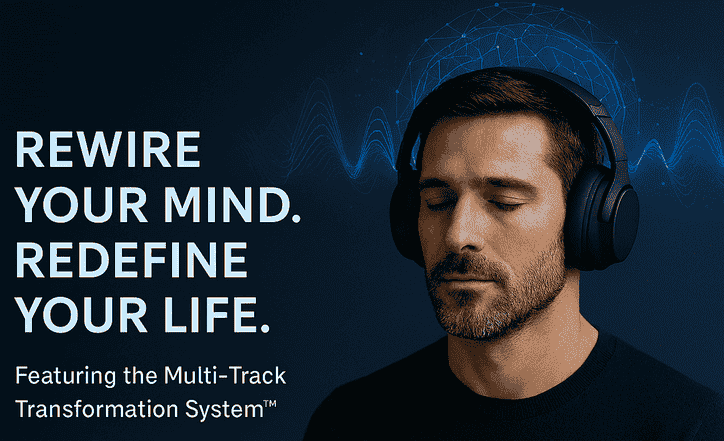
The encouraging part is this. Limiting beliefs are learned, which means they can also be unlearned. Modern neuroscience continues confirming that the brain and nervous system remain changeable throughout life. This understanding sits at the core of subconscious reconditioning approaches such as NeuroFrequency Programming™, where repeated subconscious reinforcement gradually helps replace old identity patterns with healthier emotional conditioning and stronger internal beliefs.

🔒 Related Solutions
All our programs use theta brainwave frequencies and binaural beats to guide your mind into the deeply receptive state where subconscious change actually occurs - the same state reached by experienced meditators, and the level at which hypnotic suggestion produces its most lasting results. Simply listen with headphones, relax, and let the recordings do the work.
🧠 Most Specific Program
The Confidence / Self Esteem Hypnosis Program works directly at the deepest subconscious level to bring about changes and improvements from the inside, out - which can bring a wide and ongoing range of benefits to your everyday life.
🧘 Another Powerful Program
🧠 The Freedom from Anxiety Program contains a powerful 4-track hypnosis program designed to alleviate anxiety, stress and overwhelm at the subconscious source, by providing hypnotic tracks which can be safely used at various times throughout the day.
The Deep Meditation Program allows you to access the deepest levels of relaxation to increase mental efficiency, and allows inner peace and mental clarity to flow through every area of your life.
🎯 Need Something More Personalized?
While our pre-made programs are effective for most people, if your situation feels more complex, deeply embedded, or highly personal than what a general program can address, a tailored approach may offer a deeper level of support. Our Custom Hypnosis Recordings are personally designed for you, giving you the flexibility to target your specific goals and challenges through carefully engineered layered audio tracks, theta brainwave entrainment, binaural beats, and NeuroFrequency Programming™ - to guide the mind into deeply relaxed, highly receptive states where positive subconscious changes occur more naturally.
🎯 New to Relaxation / Self-Hypnosis?
Our complementary 12 Minute Relaxation provides a guided recording perfect for starting out, or for anyone wanting quick light relaxation. More free downloads also on this page, for sleep etc.

🎧 Recommended Programs for This Topic

Confidence & Self Esteem
Strengthen yourself from within to build confidence, self esteem, resilience, and a positive self image.

Weight Loss
Create an automatic mindset of healthy living to naturally support your body, boost fat-burning habits, and achieve lasting weight loss.

Health & Healing
Harness the power of hypnosis and visualization to strengthen your health and immune system from the inside, out.

Sleep / Insomnia
Drift into a deep satisfying night of sleep, with our subliminal recording of beautiful relaxation music which synchronizes brain waves.
Shop
See our entire selection of powerful hypnotic self help programs