


Overcoming Social Anxiety Through Hypnosis:
Pathway to Confidence
 |
For millions around the world, social anxiety is more than just occasional nervousness. It's a persistent and overwhelming fear of being judged, embarrassed, or scrutinized in social situations.
Even simple interactions - like ordering coffee or speaking up in a meeting - can trigger intense discomfort.
Because asking for help can sometimes feel overwhelming or even add to the stress, many people avoid seeking support for this very common challenge.
Fortunately, there are now proven and effective approaches that make it easier to overcome both the anxiety and the hesitation around dealing with it.
Social anxiety can restrict not only our ability to connect with others but also our ability to pursue personal and professional opportunities. The impact on self-esteem, relationships, career progression, and overall quality of life can be profound.
While traditional treatments such as cognitive-behavioral therapy (CBT), medication, and exposure therapy remain valuable, many individuals are now exploring powerful complementary techniques that work on a deeper subconscious level.
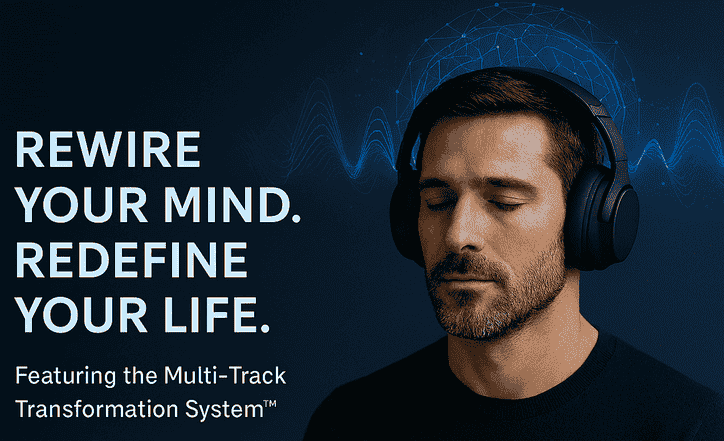
For those who find face-to-face appointments stressful, listening to professionally designed hypnosis recordings are emerging as a powerful method for reducing anxiety, reprogramming limiting beliefs, and restoring confidence in social situations.
These provide a private, low-pressure alternative that feels safe, comfortable, and highly effective.
 |
|---|
Understanding Social Anxiety
Social anxiety can manifest in various ways, from fear of public speaking to avoiding parties, work presentations, dating, or any scenario where social performance is required.
Often, the anxiety stems from a deep fear of being humiliated, rejected, or perceived as incompetent.
These fears can cause people to avoid social situations altogether, leading to a life of isolation, missed opportunities, and unfulfilled potential.
Social anxiety is not any form of weakness, but often the result of early life experiences which can shape our life - such as being criticized, bullied, or socially rejected.
The subconscious mind stores these negative memories and links them to present-day scenarios that feel threatening, even when they are safe. Over time, this conditioning becomes automatic, triggering anxiety without conscious thought.
Common symptoms include:
- Physical Symptoms: Sweating, blushing, trembling, racing heartbeat, muscle tension, nausea.
- Emotional Symptoms: Intense fear or dread, feelings of inferiority, embarrassment, panic attacks.
- Behavioral Symptoms: Avoiding eye contact, avoiding social gatherings, struggling to speak, using substances to cope.
 |
|---|
Top 20 Common Social Anxieties
These include total avoidance, or excessive worry and fear, of these following aspects - many which occur on a regular daily basis:
- Public speaking of any kind
- Being judged or negatively evaluated
- Making small talk or casual conversation
- Eating or drinking in front of others
- Looking awkward or doing something embarrassing
- Eye contact
- Meeting new people
- Being the center of attention
- How one looks or is perceived physically
- Authority figures or people in power
- Dating or romantic situations
- Being rejected, or not fitting in
- Using public restrooms (paruresis)
- Being watched while working or performing tasks
- Group conversations or group settings
- Confrontation or disagreement
- Difficulty starting or maintaining friendships
- Being laughed at or mocked
- Phone calls or voicemail due to fear of speaking
- Asking for help or support in public
It's safe to say there are over 100 identifiable social anxiety triggers when all variants are considered.
If left unaddressed, social anxiety can also lead to depression, loneliness, and impaired academic or career progress.
That’s why it’s crucial to explore all available tools to restore self-assurance and break free from limiting emotional patterns.
With regular use of a recording from home, this approach can be tailored to your own specific triggers and goals, providing a powerful custom path toward healing - including:
 |
1. Rewriting Limiting Beliefs
Our beliefs about ourselves and how others perceive us are formed early and stored in the subconscious. Through hypnosis, it’s possible to replace limiting beliefs - such as “I’m awkward,” “I always mess things up,” or “People are judging me” - with empowering thoughts like “I belong,” “I can connect easily,” and “People enjoy talking to me.” These new beliefs become the foundation for more confident behavior in real life.
2. Installing Calm, Confident Responses
Hypnosis programs the mind to respond with calmness instead of fear. For example, by repeatedly visualizing a relaxed and enjoyable conversation during hypnosis, the brain begins to associate social interactions with safety and pleasure instead of danger.
Over time, this mental rehearsal becomes real-life behavior. People find themselves naturally acting more confident, relaxed, and sociable without forcing it.
3. Clearing Emotional Blocks
Often, social anxiety is fueled by past traumas - such as an embarrassing moment, a harsh criticism, or social rejection. Hypnotherapy can revisit and neutralize the emotional charge around those memories, helping the mind release them.
By healing these experiences at the root, clients can move forward without the emotional baggage that was previously holding them back.
4. Empowering the Subconscious
Hypnotherapy is particularly effective because it speaks the language of the subconscious - imagination, symbolism, and emotion. Instead of just understanding your fears intellectually, you experience transformation on a deeper level. Then your subconscious begins aligning with your conscious desire to feel relaxed, present, and in control in social situations.
 |
|---|
Daily Life Case Examples
James was a 29-year-old software engineer who experienced severe anxiety at networking events. Despite being highly competent in his field, he avoided team gatherings and never spoke up in meetings. After four sessions of hypnotherapy, James began feeling more relaxed and open. He started speaking in meetings, initiated casual conversations with colleagues, and even presented at a company event.
Maria is a university student, who struggled with dating and making friends due to her fear of being judged. After listening to a self-hypnosis audio for three weeks, she reported less physical tension in social settings, found it easier to maintain eye contact, and began enjoying interactions she once dreaded.
These stories are not uncommon - hypnosis is empowering people to reclaim their confidence every day.
 |
Guided Audio Hypnosis MP3's for Use At Home
by Craig Townsend - Mental Trainer / Clinical Hypnotherapist
Hypnosis MP3 Downloads available for Social Anxiety:
* Intimacy
* Dating Anxiety
* Public Speaking
* Talking to Women
* Life Stress / Anxiety
* Crowds - Agoraphobia
Or...
Target Your Exact Needs ⚡
Custom Hypnosis Recordings -
Experience the Peace.
Personally designed to align with your unique journey & exact needs.
[More Info]
***
Or you might first like to try our free '12 Minute Relaxation' mp3
Just click the button to download. For PC - click and choose 'Save', then check your Downloads folder.
iPhone - click and check your 'Files' app (click to open from zip file).

Scientific Evidence and Studies
Though hypnosis was once viewed skeptically, modern research has validated its effects. In a meta-analysis published in the journal Psychology of Consciousness, researchers found that hypnosis is particularly effective for anxiety reduction. Functional MRI studies show that during hypnosis, brain regions related to focused attention, emotional control, and self-awareness become more active and synchronized.
A 2016 study at Stanford University found that hypnosis can induce measurable changes in brain activity related to calmness and dissociation from stress.
In another clinical trial, patients undergoing hypnotherapy for social phobia reported significant improvements in confidence, reduced anxiety, and greater social functioning compared to control groups.
Hypnosis is becoming a trusted and comforting way to ease social anxiety, shift limiting beliefs, and build real confidence in everyday interactions.
For many people who feel uneasy in traditional face-to-face appointments, listening to a calming hypnosis recording in the safety of their own space feels far less stressful and often more effective. It works gently alongside other treatments without interfering and is also particularly effective when combined with other therapeutic techniques.
How to Get Started
If you’re ready to explore hypnosis for social anxiety, there are a few routes you can take:
- Try a professionally produced self-hypnosis audio, designed for social confidence.
- Incorporate daily visualization and relaxation practices into your routine.
The key is consistency. Just as social anxiety was built over time through repeated experiences, confidence can be rebuilt through repeated exposure to empowering mental suggestions and imagery. Most people begin noticing changes within 1–2 weeks of regular use.
Social anxiety doesn’t have to define your life. Hypnosis offers a safe, natural, and deeply effective way to access the root of your fears, rewrite limiting beliefs, and build new pathways to confidence.
Whether used on its own or alongside traditional therapy, hypnosis is helping people feel more at ease, more empowered, and more connected than ever before. If you’re ready to transform your social experience, the journey starts within - and hypnosis can help you make that transformation real, lasting, and life-changing.